Wake Up Queer: Beyond Survival
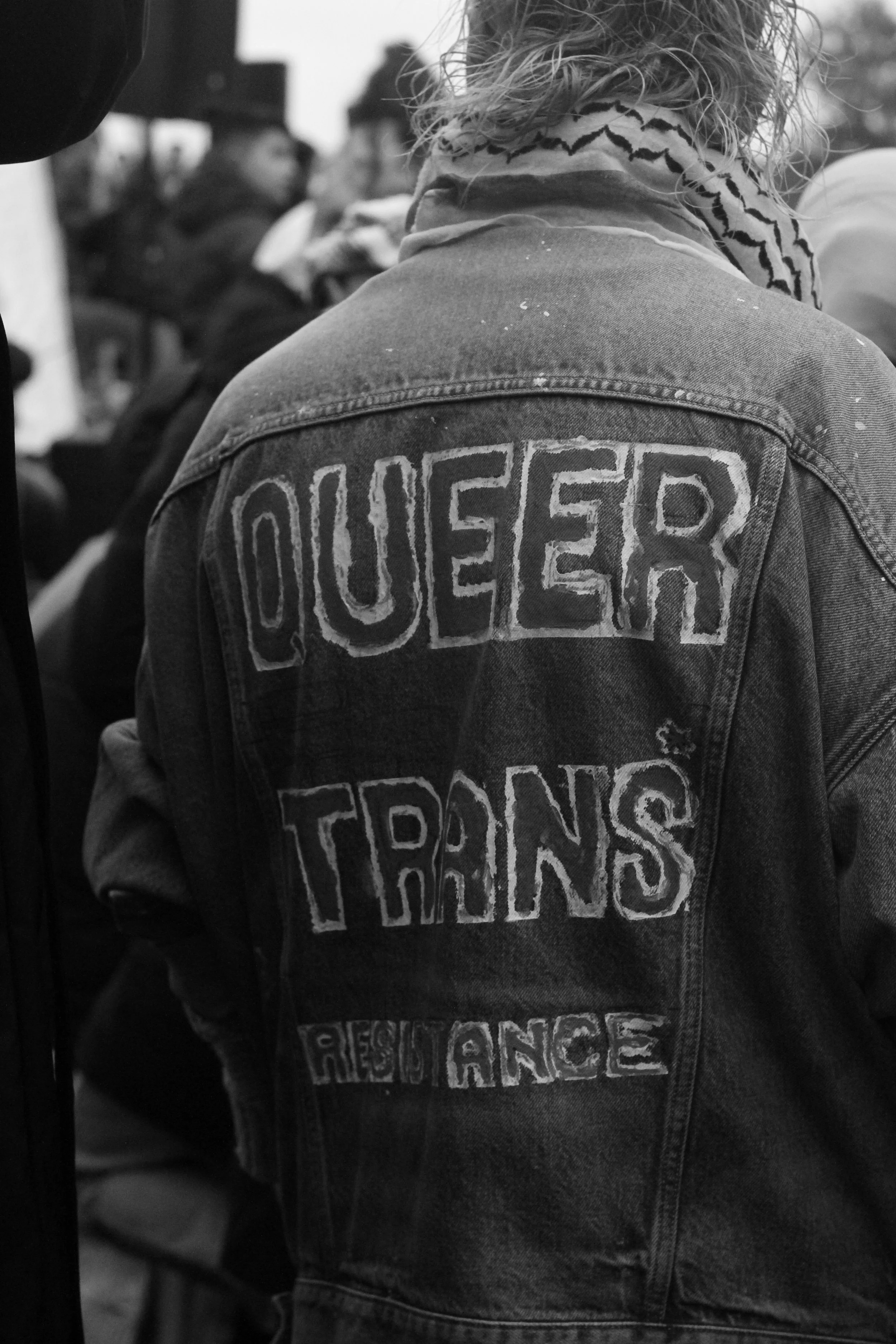
Gleisdreick, Berlin / October 29th, 2023 / Ceasefire Protest
In the most harrowing chapters of history, when empires crumbled and the so-called pillars of justice abandoned us, we, the queer community, did not flinch. We could not. As the world turned away or sought to erase us, we did what we have always done: we created our own lifelines, built our own sanctuaries, and forged systems of survival with nothing but our collective will. Queer survival has never been a solo act.
This defiance, this refusal to be erased, defines us. Through centuries of persecution, we have risen time and time again, refusing to surrender to forces that sought to silence us. But, as today’s landscape is reshaped by war, authoritarianism, and a global resurgence of bigotry, we must ask ourselves: Are we truly doing enough to protect one another? Do we, as a global queer community, understand that our survival, now more than ever, depends on our unwavering solidarity and collective action?
From the trenches of Ukraine to the occupied streets of Palestine, from the favelas of Brazil to the townships of South Africa, queer lives are being waged in battles not just for rights, but for survival itself. This is not a passive call to action. This is a global rallying cry; a demand for humanity to recognise that our survival is inseparably linked to the strength of the bonds we forge and the relentless ways in which we stand for one another. The future of queer survival does not rest in the hands of governments or institutions; it lies in the fierce determination with which we fight, and in the unshakeable truth that together, we are unbreakable.
The Legacy of Queer Resistance: Learning from History
Throughout history, we have learned to survive in the margins, in the shadows, often left out of the grand narratives of liberation. If we are to understand the future of queer survival, we must look back at our history of resilience.
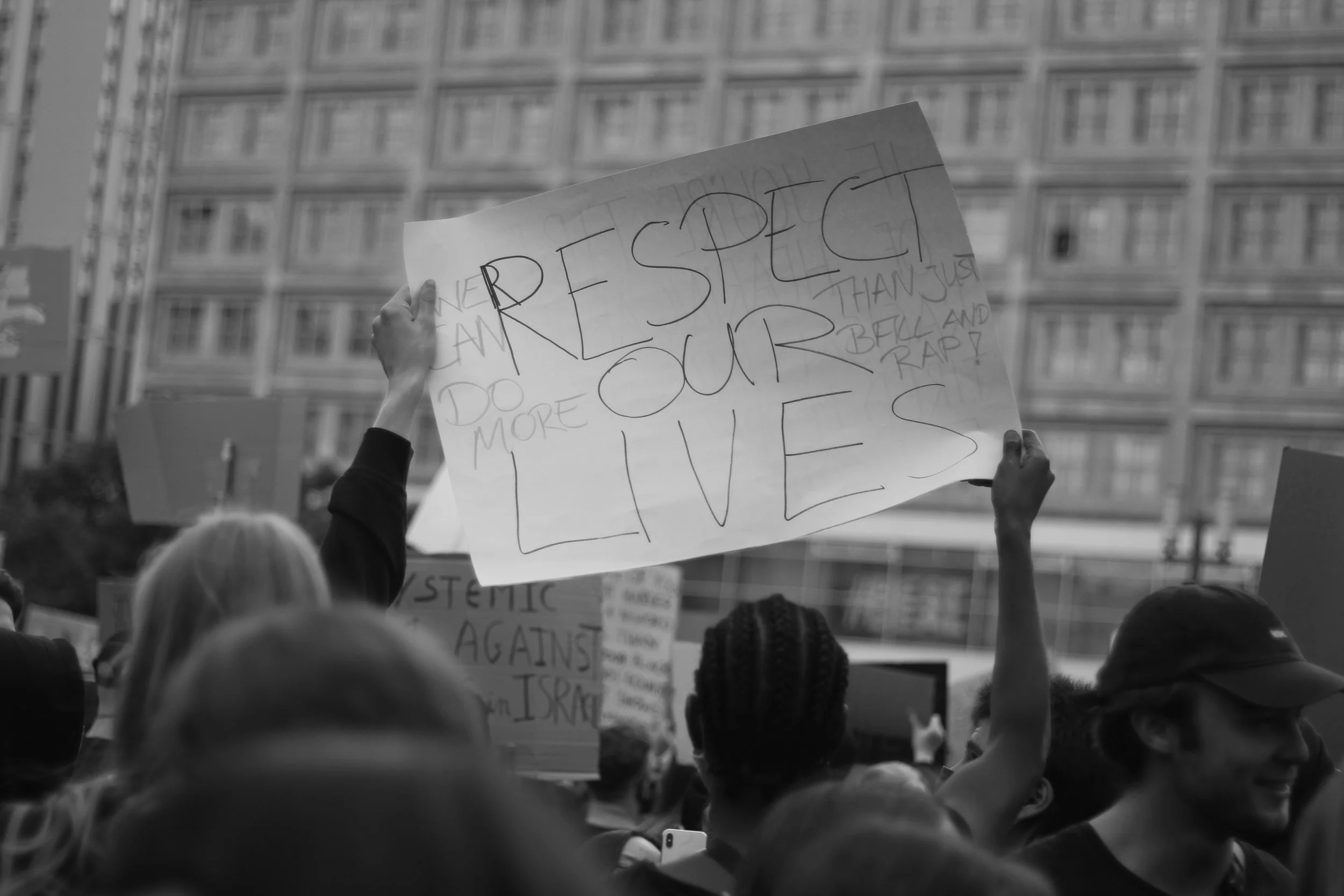
Alexanderplatz, Berlin / June 6th, 2020 / Black Lives Matter Protest
In Weimar Germany, the queer community thrived, although briefly, in the face of rising fascism. The Institut für Sexualwissenschaft, founded by Magnus Hirschfeld, was a beacon of hope for LGBTQ+ people across Europe, providing medical treatment and advocating for legal rights. But in 1933, when the Nazis came to power, they destroyed the institute and burned its invaluable research. Queer people were once again pushed into hiding, and many were sent to concentration camps, their identities erased even from the annals of suffering. Still, the seeds planted during the Weimar period inspired future generations of LGBTQ+ activists, reminding us that even in the face of complete annihilation, we remain.
In Cuba, following the revolution, LGBTQ+ people were sent to UMAP (Unidades Militares de Ayuda a la Producción) labour camps in the 1960s. They were deemed "counter-revolutionary," a threat to the moral fabric of the socialist state. Evenso, by the 1990s, amid economic collapse, queer Cubans built covert networks to look after one another in every aspect. Despite state repression and a conservative culture, they found ways to survive, resist, and create safe spaces. These efforts laid the foundation for the eventual recognition of LGBTQ+ rights in Cuba, showing that even in times of crisis, collective care leads to progress.
Meanwhile, in Brazil, during the brutal military dictatorship of the 1960s and '70s, queer people faced severe oppression. The regime targeted anyone who deviated from the heterosexual, patriarchal norm. Yet, it was during this period that LGBTQ+ activists began to organise in clandestine ways. In the 1970s, groups like Somos, Brazil's first queer rights organisation, formed. They created underground networks of solidarity, advocating for both sexual freedom and resistance to state violence. Today, Brazil’s LGBTQ+ community continues to face severe violence, with the country ranking among the highest in the world for anti-queer hate crimes. But the enduring legacy of resistance remains strong, and queer Brazilians continue to care for one another in the face of state apathy and brutality.
These examples from different corners of the world show us one thing: our survival depends on our ability to build systems of compassion, even in the most hostile environments.
Ukraine: Queer Lives on the Frontlines
The examples above share one thing: distance. Historical distance, geographic distance, the comfortable distance of cases that have already resolved themselves into lessons. Ukraine offers no such distance. The erasure happening there is not archived; it is active, accelerating, and it is being carried out in part by a country that calls itself a defender of European values.
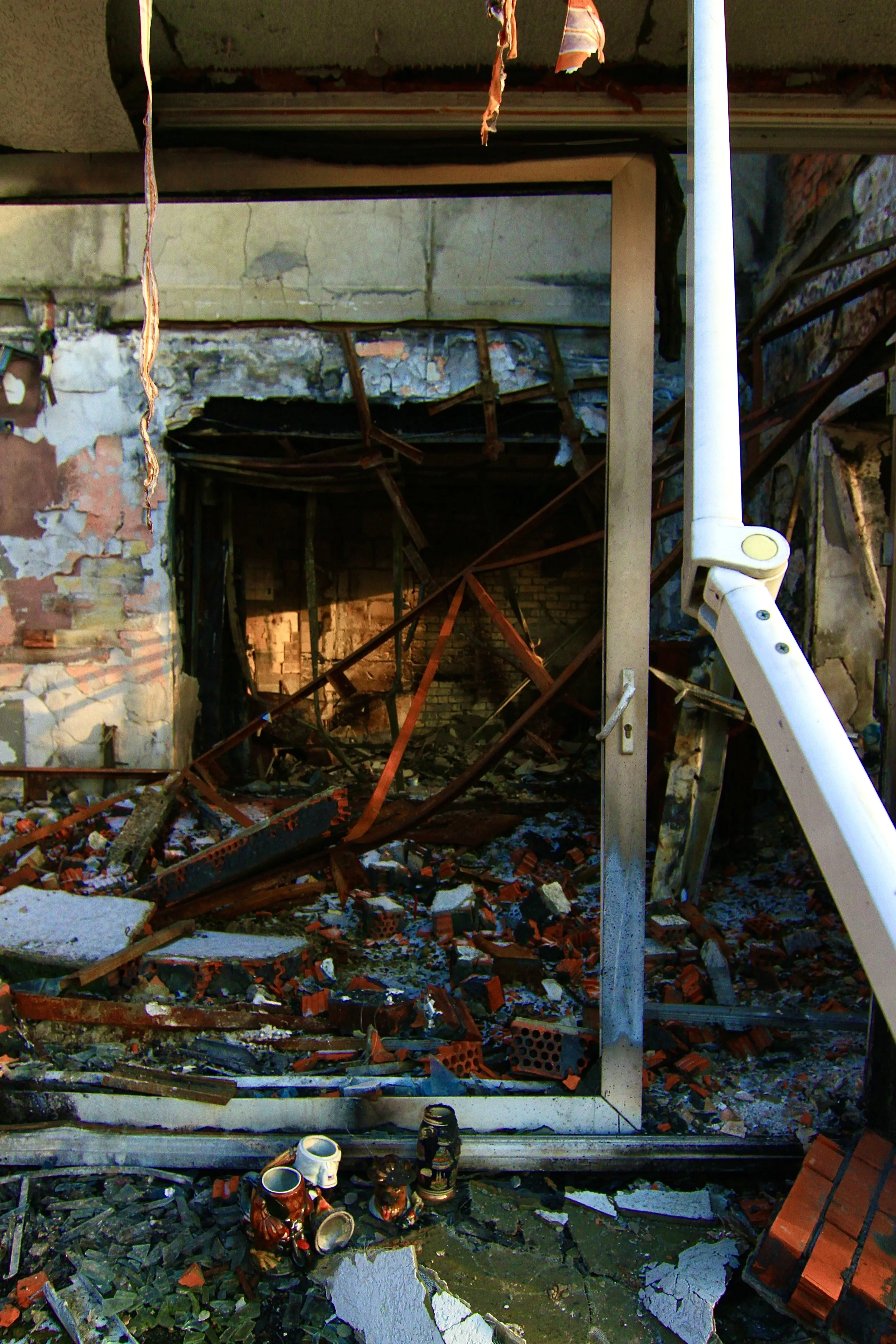
Bucha, Ukraine / January 27th, 2023 / Post Russian Occupation
In my interview with a gay man from Dnipro living in Kyiv, he explained the shift that occurred as the war deepened: “Before the war, there was hope for queer rights. But now, the war is all that matters. Queer people are not considered a priority, even though many of us are on the frontlines, risking our lives.”
In Kyiv and other major cities, LGBTQ+ organisations mobilised quickly after the invasion, providing shelter, food, and medical assistance to queer individuals displaced by the conflict. But the war’s second year has brought new challenges. “Drafting has become more violent and aggressive,” he said. “The military can now enter commercial properties to ‘recruit,’ and this has created an atmosphere of fear, especially for queer people who already feel vulnerable.”
Despite the dangers, queer Ukrainians continue to fight for their country, for each other, and for the future of LGBTQ+ rights. But the truth is: they are running out of resources. “We’re surviving because of international donations, but many organisations have stopped funding us,” he told me. “We need global solidarity, not just to survive, but to be visible.”
Palestine: Resistance in the Shadows of Occupation
Ukraine gives us war as the mechanism of erasure. Palestine gives us something more insidious: the weaponisation of queer identity itself as an instrument of occupation. This is where the argument gets harder, and it has to be made anyway.
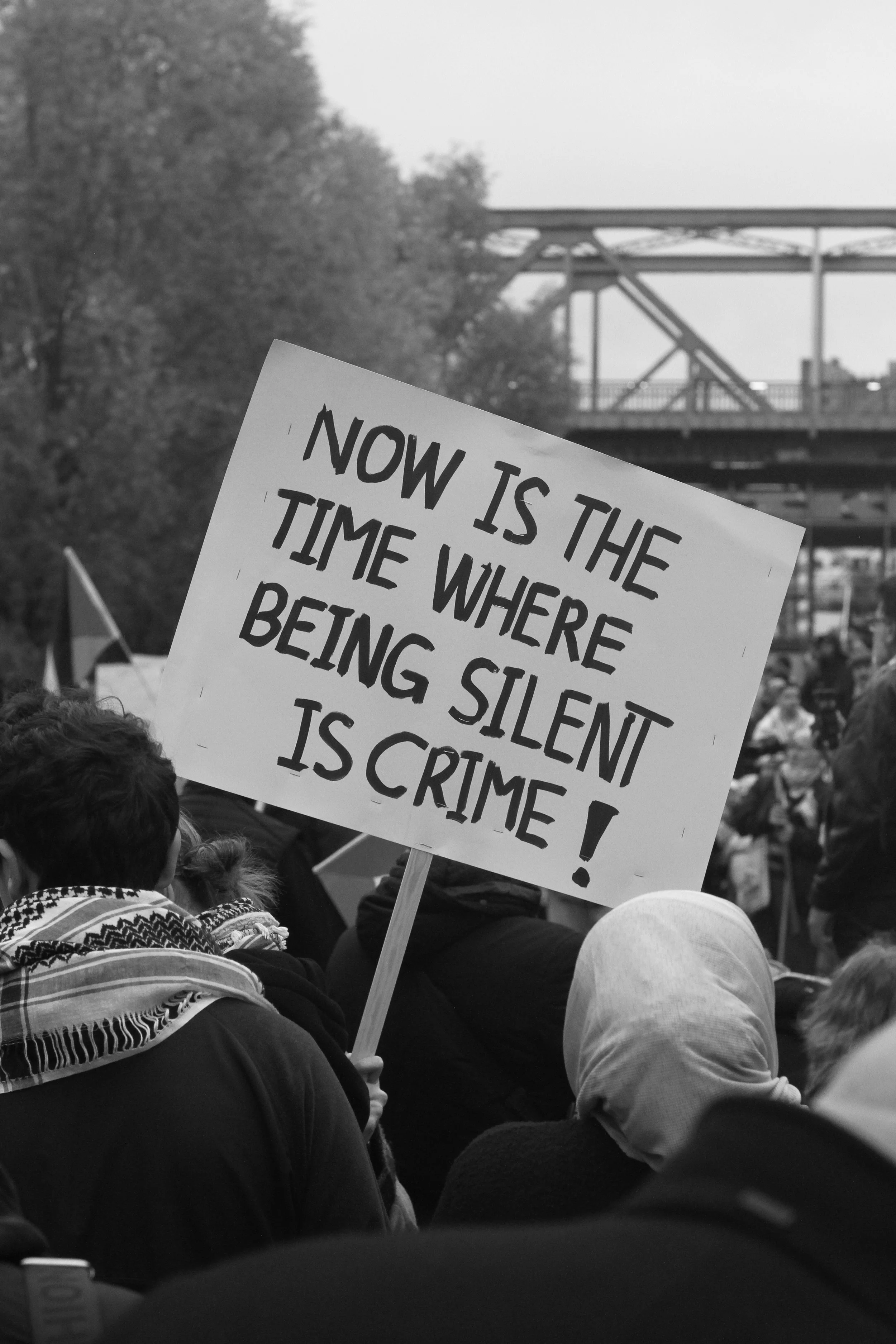
Gleisdreick, Berlin / October 29th, 2023 / Ceasefire Protest
The group Al-Qaws, which advocates for sexual and gender diversity in Palestinian society, has been a lifeline for many queer Palestinians. They offer psychological support, safe spaces, and advocacy, despite facing threats from both the Palestinian authorities and Israeli forces. Under Hamas rule in Gaza, where homosexuality is criminalised, queer people live in constant fear of exposure and violence. Many are forced into heterosexual marriages or must flee the region entirely.
One activist told me, “Our struggle is not just about being queer. It’s about surviving in a society that doesn’t want us and under an occupation that uses our identities against us.”
The Israeli military has been known to use the sexuality of queer Palestinians as a means of blackmail, coercing them into becoming informants. This “pinkwashing” tactic reveals the lengths to which queer Palestinians must go to protect their identities. And yet, in the face of this dual oppression, the community persists, reminding us that queer survival in occupied territories is not just about staying alive; it’s about resisting erasure.
Global South: Queer Survival Beyond Europe and the Middle East
Europe and the Middle East are not the story. They are where Western cameras point that have the benefit of being the most broadcasted. The infrastructure of queer survival — the underground networks, the mutual aid systems, the organisations that operate without international funding or recognition — is most sophisticated precisely where it is least documented. Uganda. India. South Africa. These are not simply footnotes; they are the proof of concept.
In places like Uganda, where homosexuality is criminalised under harsh anti-LGBTQ+ laws, queer Ugandans have developed underground support systems to protect themselves from state-sanctioned violence. The organisation Sexual Minorities Uganda (SMUG) has been at the forefront of this fight, providing legal support, shelter, and advocacy for LGBTQ+ individuals facing persecution.
In India, following the decriminalisation of homosexuality in 2018, queer communities continue to face discrimination, particularly in rural areas. But local LGBTQ+ groups, such as Naz Foundation and Humsafar Trust, have created networks that provide everything from healthcare to legal aid, ensuring that queer people are not left behind as the country slowly moves towards acceptance.
In South Africa, one of the few African nations where LGBTQ+ rights are constitutionally protected, queer people still face brutal violence, particularly in townships. In the face of this violence, organisations like Triangle Project and Gender DynamiX have built community centres, advocacy networks, and safe houses that tend to the most vulnerable among the LGBTQ+ population. These spaces offer not only protection but also hope. Hope that even in the face of violence, queer people can prosper.
A Global Call to Action: Our Survival is Collective
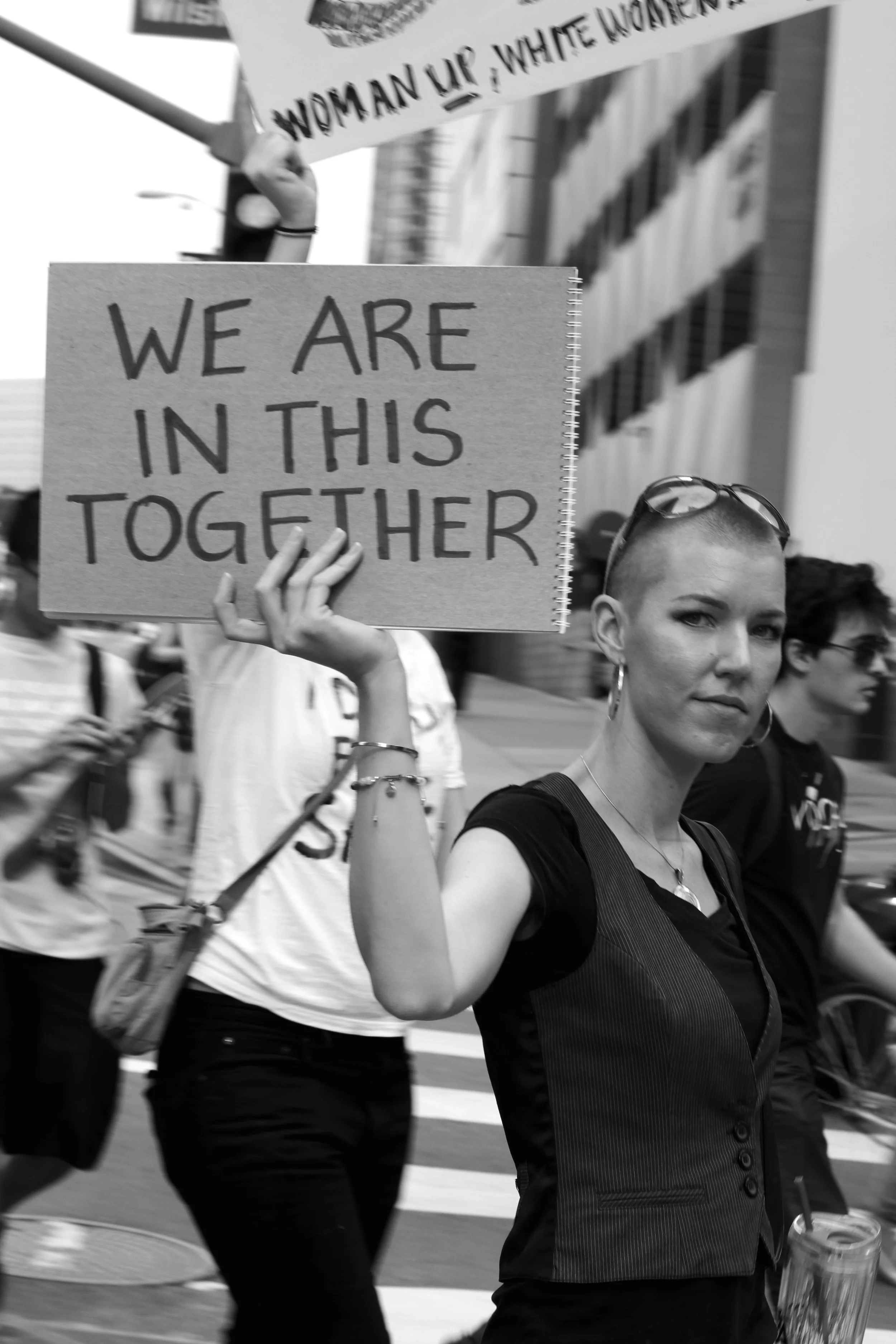
Downtown Los Angeles, CA / November 2016 / Post-Election Protests
These stories, from Ukraine to Palestine, from Brazil to Uganda, tell us one undeniable truth: Queer survival is, and has always been, a collective effort. When governments fail, when institutions collapse, when the world turns its back on us, we rise. We build our own systems of inclusive compassion, solidarity, and resistance. But we cannot do it alone.
Now, more than ever, we must recognise that our struggles are interconnected. The queer person fighting for their life in a Syrian refugee camp is linked to the queer person fleeing persecution in Uganda, the trans person denied healthcare in the U.S., and the LGBTQ+ activist organising in Brazil. Our survival depends on our ability to see these connections and to act on them.
This is a call to every queer person, every ally, and every community around the world: We must stand together. We must support each other. Whether through direct action, financial support, advocacy, or simply amplifying the voices of those being silenced, we must take care of our own. Because if history has taught us anything, it’s that no one else will.
In the words of the Ukrainian activist I interviewed, “Just surviving is not enough. We need visibility, we need support, we need representation.”
Our existence has never been promised; it is something we claim, relentlessly, day after day, in every corner of the world. But when we persist together, when we forge unbreakable bonds of care and solidarity, survival becomes inevitable. And beyond that, we will not just endure, we will defy, we will resist, and we will thrive.
The fight for queer survival is global, and it is now.
WAKE UP QUEER!
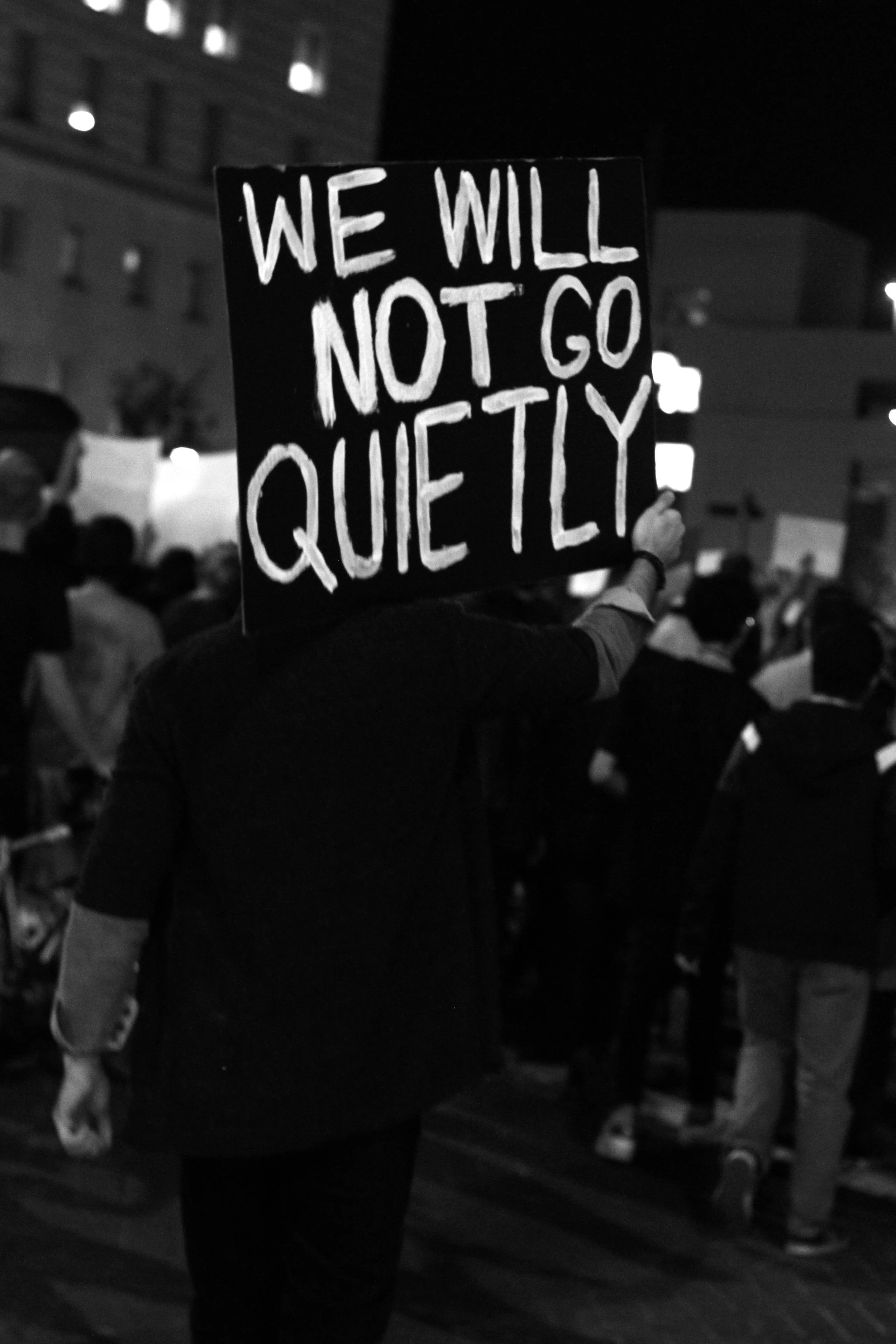
Downtown Los Angeles, CA / November 2016 / Post-Election Protests