(DE) Wake Up Queer: Jenseits des Überlebens
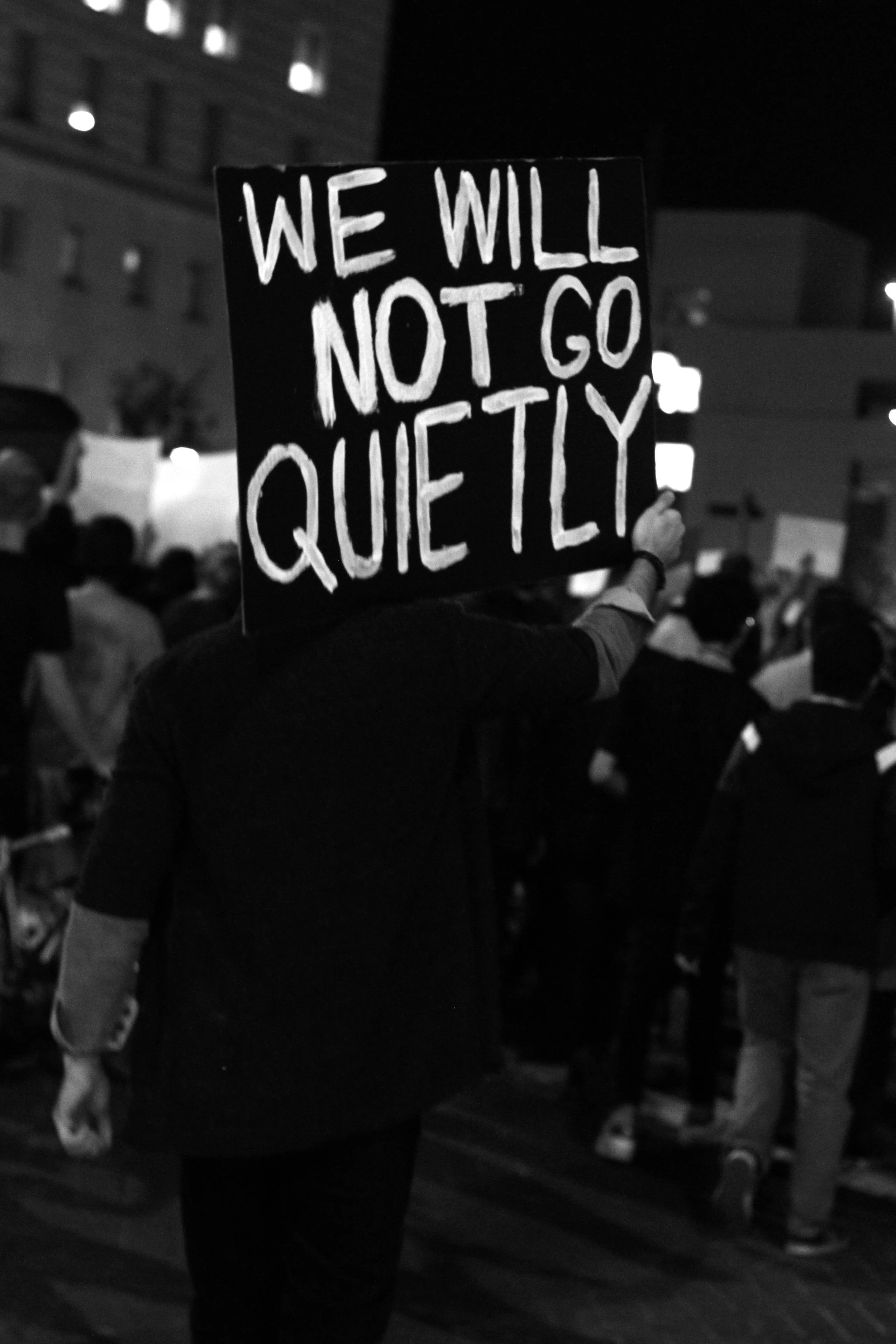
Gleisdreick, Berlin / October 29th, 2023 / Ceasefire Protest
In den erschütterndsten Kapiteln der Geschichte, als Imperien zerfielen und die so genannten Säulen der Gerechtigkeit uns im Stich ließen, haben wir, die queere Gemeinschaft, nicht gezuckt. Wir konnten es nicht. Als die Welt sich abwandte oder versuchte, uns auszulöschen, taten wir, was wir immer getan haben: Wir schufen unsere eigenen Lebenslinien, bauten unsere eigenen Zufluchtsorte und schmiedeten Systeme des Überlebens mit nichts als unserem kollektiven Willen. Nicht nur, weil es unsere Pflicht war, sondern auch, weil es unser einziger Weg zur Existenz war.
Dieser Trotz, diese Weigerung, ausgelöscht zu werden, macht uns aus. Durch Jahrhunderte der Verfolgung hindurch haben wir uns immer wieder erhoben und uns geweigert, vor Kräften zu kapitulieren, die uns zum Schweigen bringen wollten. Doch in der heutigen Zeit, in der Krieg, Autoritarismus und ein weltweites Wiederaufleben von Fanatismus die Landschaft verändern, müssen wir uns fragen: Tun wir wirklich genug, um uns gegenseitig zu schützen? Sind wir uns als globale queere Gemeinschaft darüber im Klaren, dass unser Überleben heute mehr denn je von unserer unerschütterlichen Solidarität und unserem gemeinsamen Handeln abhängt?
Von den Schützengräben in der Ukraine bis zu den besetzten Straßen Palästinas, von den Favelas in Brasilien bis zu den Townships in Südafrika kämpfen queere Menschen nicht nur um ihre Rechte, sondern auch um ihr Überleben. Dies ist kein passiver Aufruf zum Handeln. Dies ist ein globaler Aufruf, eine Aufforderung an die Menschheit zu erkennen, dass unser Überleben untrennbar mit der Stärke der Bande verbunden ist, die wir knüpfen, und mit der unnachgiebigen Art und Weise, in der wir füreinander einstehen. Die Zukunft des Überlebens von Queers liegt nicht in den Händen von Regierungen oder Institutionen; sie liegt in der grimmigen Entschlossenheit, mit der wir kämpfen, und in der unerschütterlichen Wahrheit, dass wir gemeinsam unzerbrechlich sind.
Das Erbe des queeren Widerstands: Aus der Geschichte lernen
Die Geschichte hat uns gelehrt, in den Randbereichen zu überleben, im Schatten, oft aus den großen Erzählungen der Befreiung ausgeschlossen. Wenn wir die Zukunft des queeren Überlebens verstehen wollen, müssen wir auf unsere Geschichte der Widerstandskraft zurückblicken.
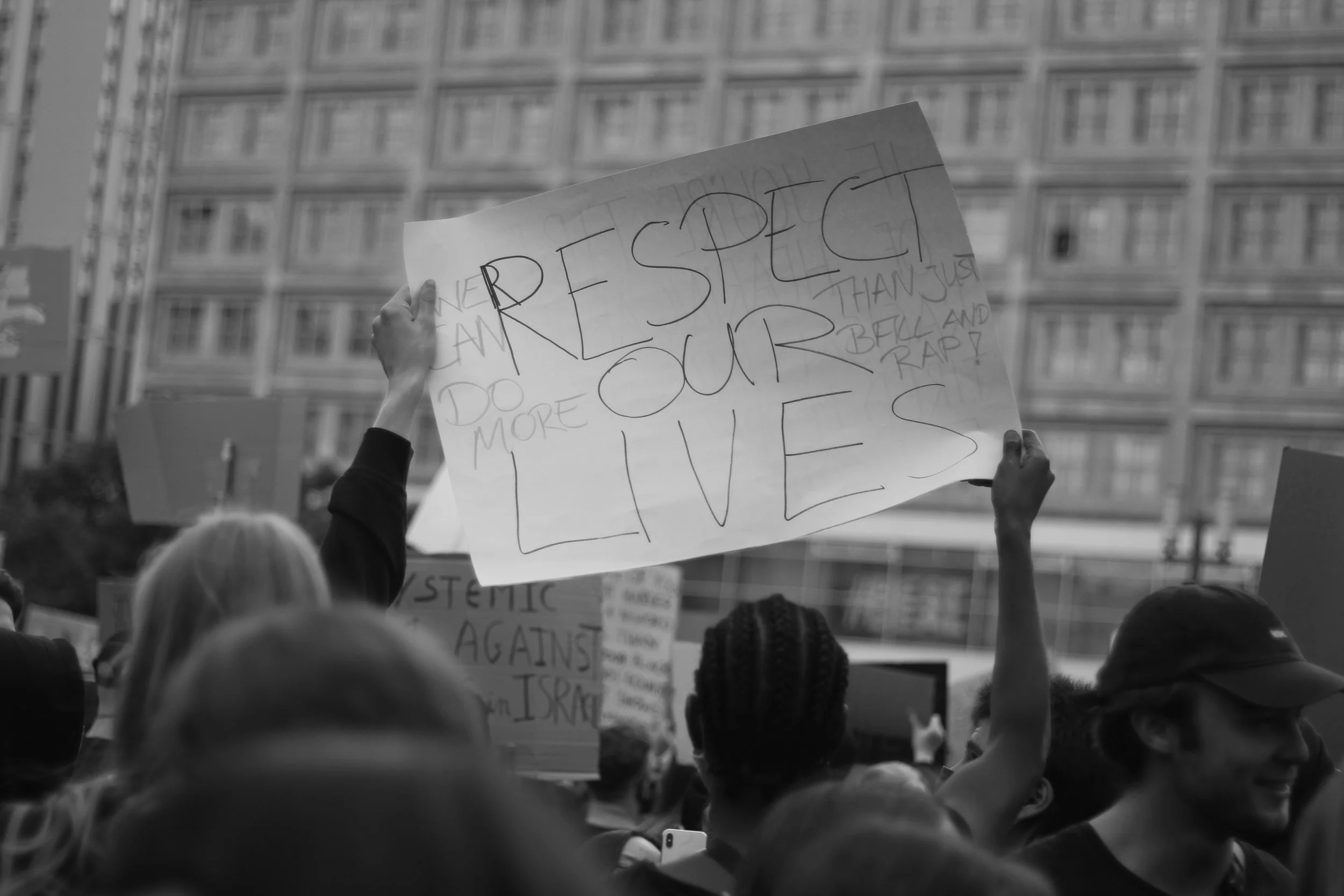
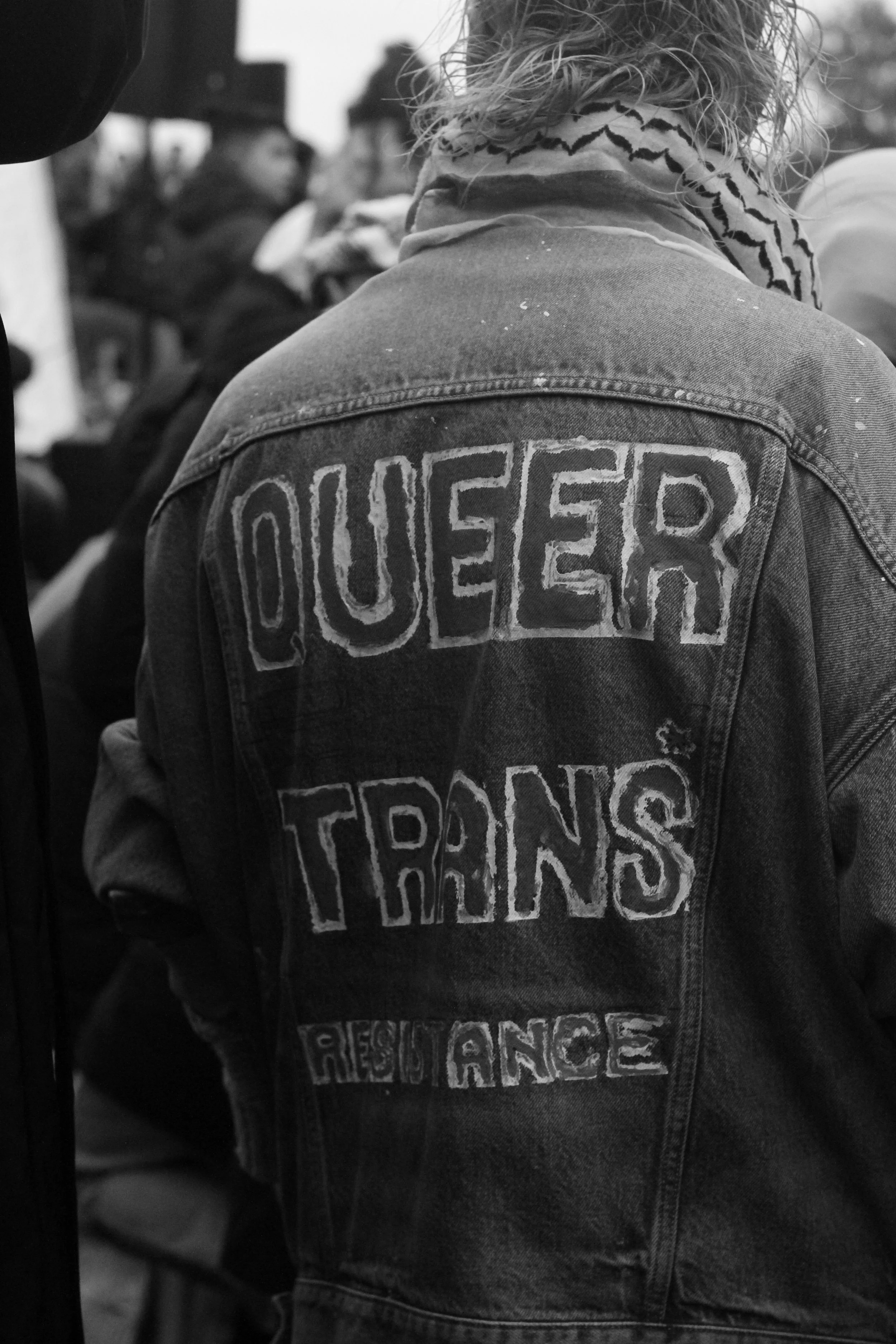
Alexanderplatz, Berlin / June 6th, 2020 / Black Lives Matter Protest
Im Weimarer Deutschland blühte die queere Gemeinschaft, wenn auch nur kurz, angesichts des aufkommenden Faschismus. Das Institut für Sexualwissenschaft, gegründet von Magnus Hirschfeld, war ein Leuchtturm der Hoffnung für LGBTQ+ Menschen in ganz Europa. Doch 1933, als die Nazis an die Macht kamen, zerstörten sie das Institut und verbrannten seine unschätzbaren Forschungen. Queere Menschen wurden wieder in den Untergrund gedrängt, viele in Konzentrationslager verschleppt, ihre Identitäten sogar aus den Annalen des Leidens ausgelöscht. Dennoch inspirierten die in der Weimarer Zeit gesäten Ideen spätere Generationen von LGBTQ+ Aktivist*innen und erinnern uns daran, dass wir selbst angesichts totaler Vernichtung wieder auferstehen.
In Kuba wurden LGBTQ+ Menschen nach der Revolution in den 1960er Jahren in UMAP-Arbeitslager (Unidades Militares de Ayuda a la Producción) geschickt. Sie galten als „konterrevolutionär“, als Bedrohung für den moralischen Kern des sozialistischen Staates. Doch in den 1990er Jahren, inmitten des wirtschaftlichen Zusammenbruchs, bauten queere Kubaner*innen geheime Netzwerke auf, um sich in allen Bereichen gegenseitig zu unterstützen. Trotz staatlicher Repression und einer konservativen Kultur fanden sie Wege, um zu überleben, Widerstand zu leisten und sichere Räume zu schaffen. Diese Bemühungen legten den Grundstein für die spätere Anerkennung der LGBTQ+-Rechte in Kuba und zeigten, dass kollektive Fürsorge selbst in Krisenzeiten Fortschritt ermöglicht.
In Brasilien, während der brutalen Militärdiktatur der 1960er und 70er Jahre, wurden queere Menschen massiv unterdrückt. Das Regime verfolgte alle, die von der heterosexuellen, patriarchalen Norm abweichen. Doch gerade in dieser Zeit begannen LGBTQ+ Aktivistinnen, sich im Untergrund zu organisieren. In den 1970er Jahren entstanden Gruppen wie „Somos“, Brasiliens erste Queer-Rechtsorganisation. Sie schufen geheime Solidaritätsnetzwerke und setzten sich sowohl für sexuelle Freiheit als auch für den Widerstand gegen staatliche Gewalt ein. Heute sieht sich die LGBTQ+ Gemeinschaft in Brasilien weiterhin mit schwerer Gewalt konfrontiert, und das Land gehört zu den Ländern mit den höchsten Zahlen von queerfeindlichen Hassverbrechen. Doch das fortbestehende Erbe des Widerstands bleibt stark, und queere Brasilianerinnen kümmern sich weiterhin umeinander trotz staatlicher Gleichgültigkeit und Brutalität.
Diese Beispiele aus verschiedenen Teilen der Welt zeigen uns eines: Unser Überleben hängt davon ab, dass wir Systeme des Mitgefühls aufbauen, selbst in den feindlichen Umgebungen.
Ukraine: Queere Leben an der Front
In der Ukraine, wo die queere Gemeinschaft vor der russischen Invasion begann, an Sichtbarkeit zu gewinnen, hat der Krieg LGBTQ+ Stimmen zum Schweigen gebracht und sie wieder in den Schatten gedrängt. Inmitten des Chaos kämpfen queere Ukrainer*innen nicht nur für ihr Land, sondern auch für das Recht, in diesem zu existieren.
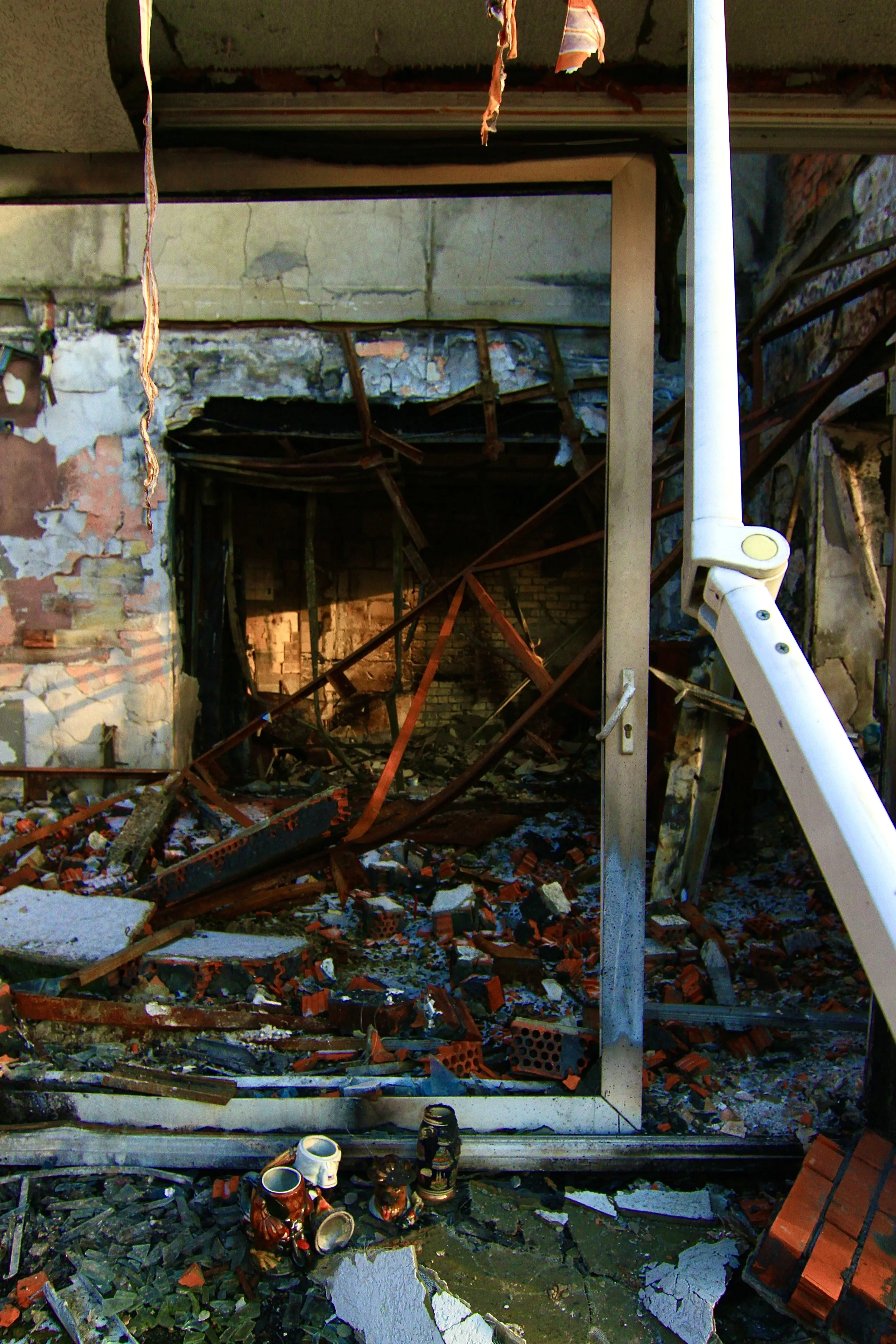
Bucha, Ukraine / January 27th, 2023 / Post Russian Occupation
In einem Interview mit einem schwulen Mann aus Dnipro, der in Kiew lebt, erklärte er die Veränderung, die sich mit der Eskalation des Krieges vollzog: „Vor dem Krieg gab es Hoffnung auf queere Rechte. Aber jetzt zählt nur noch der Krieg. Queere Menschen sind keine Priorität, obwohl viele von uns an der Front stehen und ihr Leben riskieren.“
In Kiew und anderen Großstädten mobilisierten LGBTQ+ Organisationen schnell nach der Invasion, boten Schutz, Nahrung und medizinische Hilfe für queere Menschen, die durch den Konflikt vertrieben wurden. Doch das zweite Kriegsjahr bringt neue Herausforderungen mit sich. „Die Rekrutierung ist aggressiver geworden“, sagte er. „Das Militär darf jetzt auch Gewerbeimmobilien betreten, um ‘Rekruten’ zu gewinnen, was eine Atmosphäre der Angst geschaffen hat, insbesondere für queere Menschen, die sich bereits verwundbar fühlen.“
Trotz der Gefahren kämpfen queere Ukrainer*innen weiter – für ihr Land, füreinander und für die Zukunft der LGBTQ+ Rechte. Doch die Wahrheit ist: Ihre Ressourcen gehen zur Neige. „Wir überleben dank internationaler Spenden, aber viele Organisationen haben aufgehört, uns zu finanzieren“, sagte er. „Wir brauchen globale Solidarität, nicht nur, um zu überleben, sondern um sichtbar zu bleiben.“
Palästina: Widerstand im Schatten der Besatzung
In Palästina sehen sich queere Menschen einer doppelten Unterdrückung ausgesetzt: durch die konservativen Normen der palästinensischen Gesellschaft und durch die Gewalt der israelischen Besatzung. Für LGBTQ+ Palästinenser*innen ist der Kampf um das Überleben sowohl ein persönlicher als auch ein politischer.
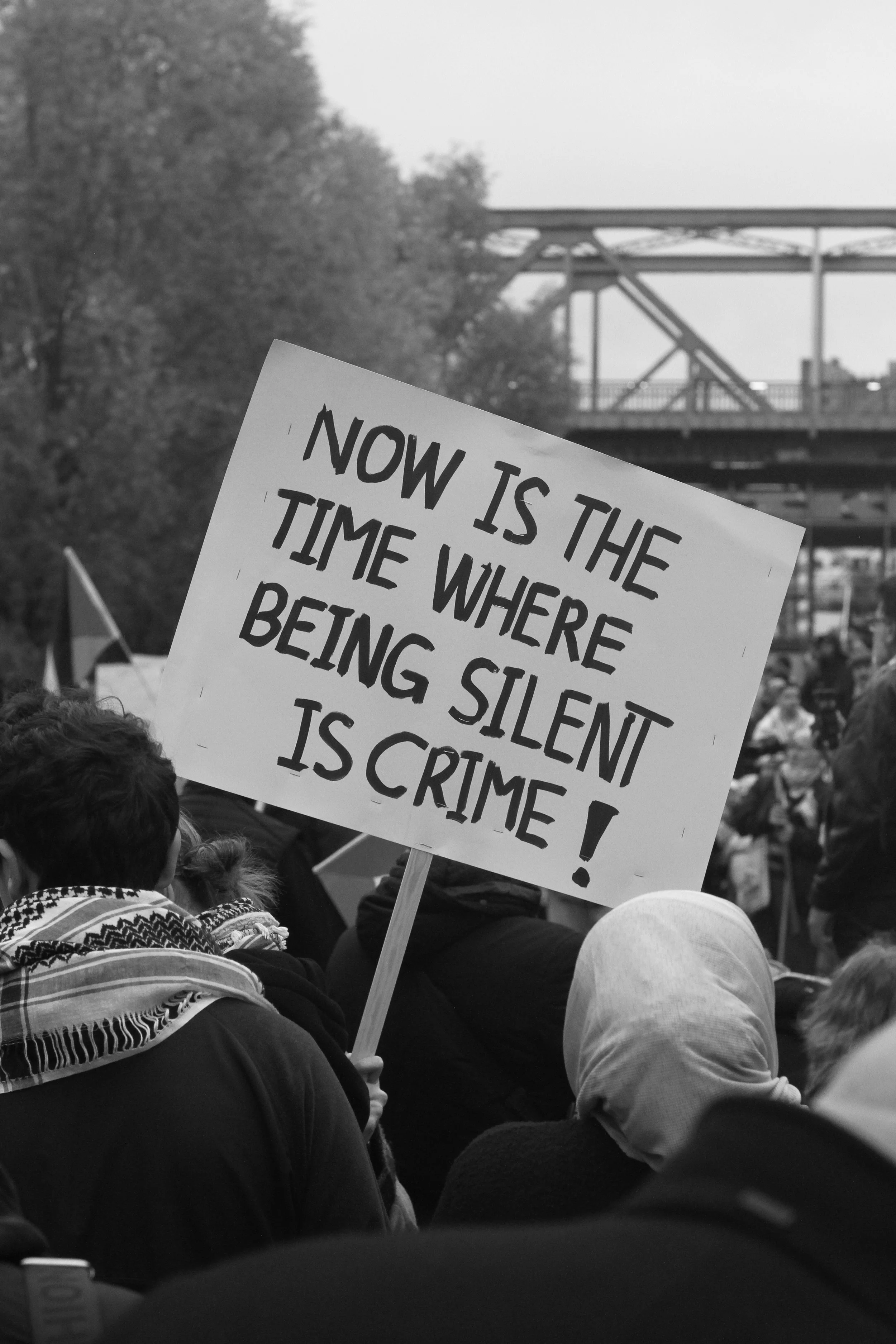
Gleisdreick, Berlin / October 29th, 2023 / Ceasefire Protest
Die Gruppe Al-Qaws, die sich für sexuelle und geschlechtliche Vielfalt in der palästinensischen Gesellschaft einsetzt, war für viele queere Palästinenser*innen eine Rettungsleine. Sie bieten psychologische Unterstützung, sichere Räume und Advocacy an, trotz der Bedrohungen durch palästinensische Behörden und israelische Kräfte. Unter der Herrschaft von Hamas im Gazastreifen, wo Homosexualität kriminalisiert ist, leben queere Menschen in ständiger Angst vor Entdeckung und Gewalt. Viele sind gezwungen, heterosexuelle Ehen einzugehen oder die Region ganz zu verlassen.
Eine Aktivistin sagte mir: „Unser Kampf geht nicht nur darum, queer zu sein. Es geht darum, in einer Gesellschaft zu überleben, die uns nicht will, und unter einer Besatzung, die unsere Identität gegen uns verwendet.“
Das israelische Militär ist dafür bekannt, die Sexualität von queeren Palästinenserinnen als Mittel der Erpressung zu nutzen und sie zu zwingen, als Informantinnen zu arbeiten. Diese „Pinkwashing“-Taktik zeigt, wie weit queere Palästinenser*innen gehen müssen, um ihre Identitäten zu schützen. Und doch, angesichts dieser doppelten Unterdrückung, bleibt die Gemeinschaft bestehen und erinnert uns daran, dass das queere Überleben in besetzten Gebieten nicht nur bedeutet, am Leben zu bleiben; es bedeutet, der Auslöschung zu widerstehen.
Globaler Süden: Queeres Überleben jenseits von Europa und dem Nahen Osten
Während sich ein Großteil der weltweiten Aufmerksamkeit auf Europa und den Nahen Osten konzentriert, erstreckt sich der Kampf um das queere Überleben weit über diese Regionen hinaus. In Ländern wie Uganda, wo Homosexualität unter strengen Anti-LGBTQ+ Gesetzen kriminalisiert wird, haben queere Ugander*innen geheime Unterstützungssysteme entwickelt, um sich vor staatlich sanktionierter Gewalt zu schützen. Die Organisation Sexual Minorities Uganda (SMUG) steht an vorderster Front dieses Kampfes und bietet rechtliche Unterstützung, Unterkünfte und Advocacy für LGBTQ+ Menschen, die Verfolgung ausgesetzt sind.
In Indien, nach der Entkriminalisierung von Homosexualität im Jahr 2018, sehen sich queere Gemeinschaften weiterhin mit Diskriminierung konfrontiert, insbesondere in ländlichen Gebieten. Doch lokale LGBTQ+ Gruppen wie die Naz Foundation und Humsafar Trust haben Netzwerke geschaffen, die von Gesundheitsversorgung bis hin zu rechtlicher Hilfe alles bieten und sicherstellen, dass queere Menschen nicht zurückgelassen werden, während sich das Land langsam in Richtung Akzeptanz bewegt.
In Südafrika, einem der wenigen afrikanischen Länder, in denen LGBTQ+ Rechte verfassungsmäßig geschützt sind, sehen sich queere Menschen weiterhin mit brutaler Gewalt konfrontiert, insbesondere in den Townships. Angesichts dieser Gewalt haben Organisationen wie Triangle Project und Gender DynamiX Gemeindezentren, Advocacy-Netzwerke und Schutzhäuser geschaffen, die sich um die Verletzlichsten der LGBTQ+ Bevölkerung kümmern. Diese Räume bieten nicht nur Schutz, sondern auch Hoffnung – Hoffnung, dass selbst angesichts von Gewalt queere Menschen aufblühen können.
Ein globaler Aufruf zum Handeln: Unser Überleben ist kollektiv
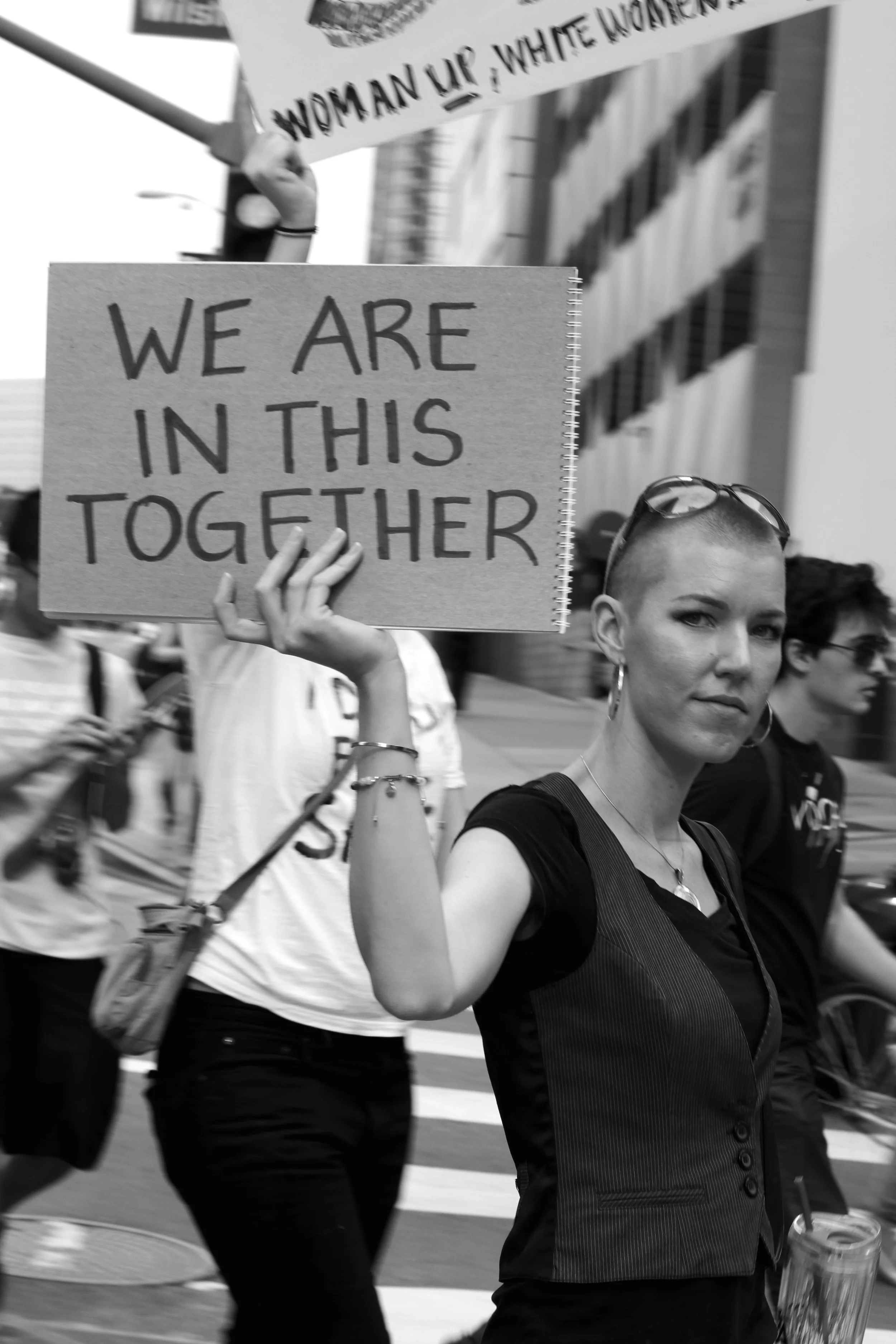
Downtown Los Angeles, CA / November 2016 / Post-Election Protests
Diese Geschichten, von der Ukraine bis Palästina, von Brasilien bis Uganda, erzählen uns eine unumstößliche Wahrheit: Queeres Überleben war und ist immer eine kollektive Anstrengung. Wenn Regierungen versagen, wenn Institutionen zusammenbrechen, wenn die Welt uns den Rücken kehrt, stehen wir auf. Wir bauen unsere eigenen Systeme aus mitfühlender Inklusion, Solidarität und Widerstand. Aber wir können es nicht allein schaffen.
Jetzt, mehr denn je, müssen wir erkennen, dass unsere Kämpfe miteinander verbunden sind. Die queere Person, die in einem syrischen Flüchtlingslager ums Überleben kämpft, ist mit der queeren Person verbunden, die vor Verfolgung in Uganda flieht, der trans Person, der in den USA die Gesundheitsversorgung verweigert wird, und dem LGBTQ+ Aktivisten, der in Brasilien organisiert. Unser Überleben hängt davon ab, dass wir diese Verbindungen erkennen und entsprechend handeln.
Dies ist ein Aufruf an jede queere Person, jeden Verbündeten und jede Gemeinschaft auf der Welt: Wir müssen zusammenstehen. Wir müssen uns gegenseitig unterstützen. Ob durch direkte Aktion, finanzielle Unterstützung, Advocacy oder einfach durch das Verstärken der Stimmen derer, die zum Schweigen gebracht werden, wir müssen füreinander sorgen. Denn wenn uns die Geschichte etwas gelehrt hat, dann das: Niemand sonst wird es tun.
In den Worten des ukrainischen Aktivisten, den ich interviewt habe: „Nur zu überleben, reicht nicht. Wir brauchen Sichtbarkeit, wir brauchen Unterstützung, wir brauchen Repräsentation.“
Unsere Existenz war nie garantiert; sie ist etwas, das wir uns Tag für Tag, unerbittlich, in jeder Ecke der Welt einfordern. Aber wenn wir zusammen aufstehen, wenn wir unzerbrechliche Bande der Fürsorge und Solidarität schmieden, wird Überleben unvermeidlich – und darüber hinaus: Wir werden nicht nur bestehen, wir werden aufsteigen, wir werden trotzen, wir werden gedeihen.
Der Kampf um das queere Überleben ist global, und er findet jetzt statt.
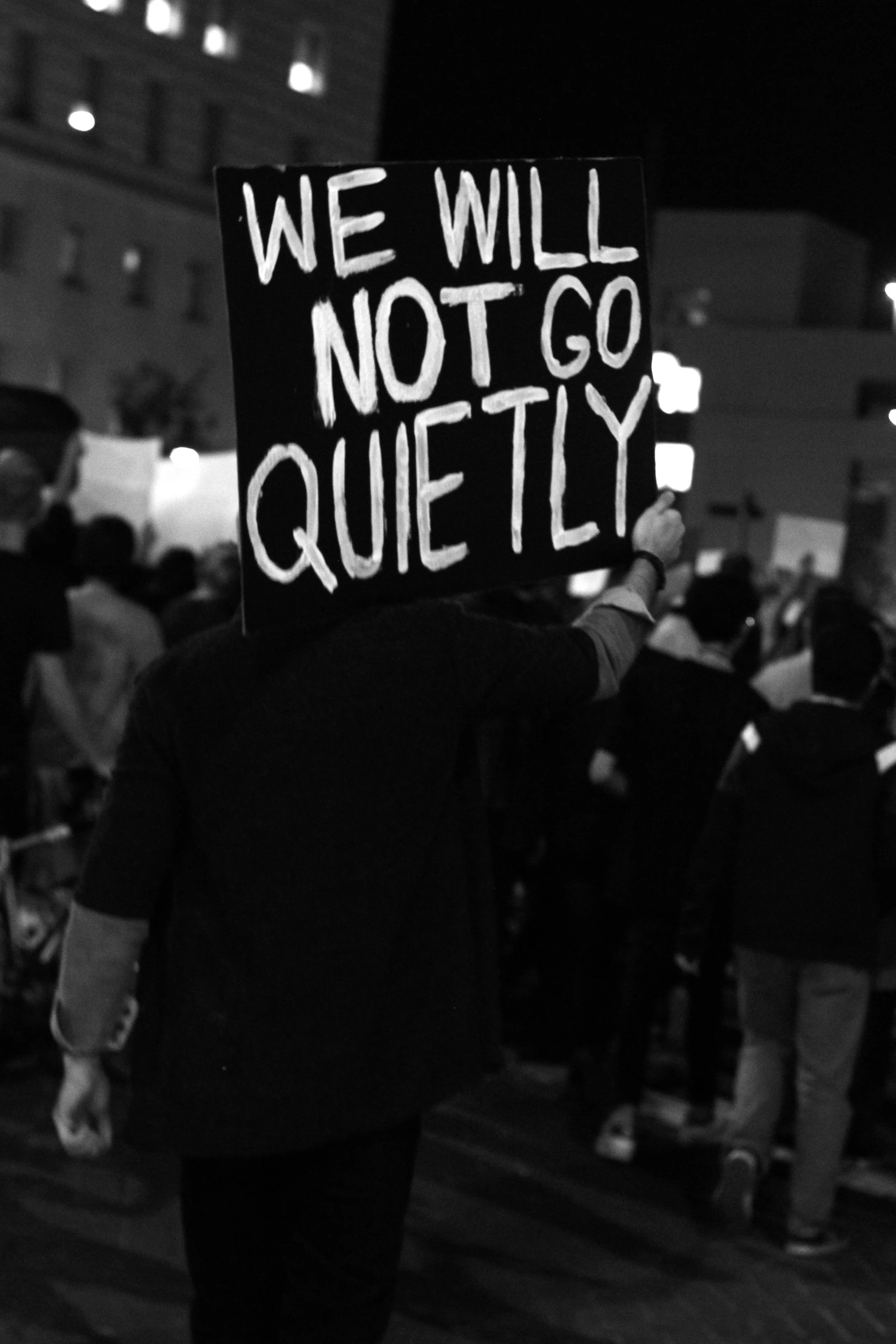
Downtown Los Angeles, CA / November 2016 / Post-Election Protests
Wake Up Queer: Beyond Survival
Gleisdreick, Berlin / October 29th, 2023 / Ceasefire Protest
In the most harrowing chapters of history, when empires crumbled and the so-called pillars of justice abandoned us, we, the queer community, did not flinch. We could not. As the world turned away or sought to erase us, we did what we have always done: we created our own lifelines, built our own sanctuaries, and forged systems of survival with nothing but our collective will. Not only because it was our duty to one another, but because it was our only path to existence.
This defiance, this refusal to be erased, defines us. Through centuries of persecution, we have risen time and time again, refusing to surrender to forces that sought to silence us. But, as today’s landscape is reshaped by war, authoritarianism, and a global resurgence of bigotry, we must ask ourselves: Are we truly doing enough to protect one another? Do we, as a global queer community, understand that our survival, now more than ever, depends on our unwavering solidarity and collective action?
From the trenches of Ukraine to the occupied streets of Palestine, from the favelas of Brazil to the townships of South Africa, queer lives are being waged in battles not just for rights, but for survival itself. This is not a passive call to action. This is a global rallying cry; a demand for humanity to recognise that our survival is inseparably linked to the strength of the bonds we forge and the relentless ways in which we stand for one another. The future of queer survival does not rest in the hands of governments or institutions; it lies in the fierce determination with which we fight, and in the unshakeable truth that together, we are unbreakable.
The Legacy of Queer Resistance: Learning from History
Throughout history, we have learned to survive in the margins, in the shadows, often left out of the grand narratives of liberation. If we are to understand the future of queer survival, we must look back at our history of resilience.
Alexanderplatz, Berlin / June 6th, 2020 / Black Lives Matter Protest
In Weimar Germany, the queer community thrived, although briefly, in the face of rising fascism. The Institut für Sexualwissenschaft, founded by Magnus Hirschfeld, was a beacon of hope for LGBTQ+ people across Europe, providing medical treatment and advocating for legal rights. But in 1933, when the Nazis came to power, they destroyed the institute and burned its invaluable research. Queer people were once again pushed into hiding, and many were sent to concentration camps, their identities erased even from the annals of suffering. Still, the seeds planted during the Weimar period inspired future generations of LGBTQ+ activists, reminding us that even in the face of complete annihilation, we remain.
In Cuba, following the revolution, LGBTQ+ people were sent to UMAP (Unidades Militares de Ayuda a la Producción) labour camps in the 1960s. They were deemed "counter-revolutionary," a threat to the moral fabric of the socialist state. Evenso, by the 1990s, amid economic collapse, queer Cubans built covert networks to look after one another in every aspect. Despite state repression and a conservative culture, they found ways to survive, resist, and create safe spaces. These efforts laid the foundation for the eventual recognition of LGBTQ+ rights in Cuba, showing that even in times of crisis, collective care leads to progress.
Meanwhile, in Brazil, during the brutal military dictatorship of the 1960s and '70s, queer people faced severe oppression. The regime targeted anyone who deviated from the heterosexual, patriarchal norm. Yet, it was during this period that LGBTQ+ activists began to organise in clandestine ways. In the 1970s, groups like Somos, Brazil's first queer rights organisation, formed. They created underground networks of solidarity, advocating for both sexual freedom and resistance to state violence. Today, Brazil’s LGBTQ+ community continues to face severe violence, with the country ranking among the highest in the world for anti-queer hate crimes. But the enduring legacy of resistance remains strong, and queer Brazilians continue to care for one another in the face of state apathy and brutality.
These examples from different corners of the world show us one thing: our survival depends on our ability to build systems of compassion, even in the most hostile environments.
Ukraine: Queer Lives on the Frontlines
In Ukraine, where the queer community had begun to gain visibility before the Russian invasion, the war has silenced LGBTQ+ voices, pushing them back into the shadows. Amid the chaos, queer Ukrainians are fighting not only for their country but for their very right to exist within it.
Bucha, Ukraine / January 27th, 2023 / Post Russian Occupation
In my interview with a gay man from Dnipro living in Kyiv, he explained the shift that occurred as the war deepened: “Before the war, there was hope for queer rights. But now, the war is all that matters. Queer people are not considered a priority, even though many of us are on the frontlines, risking our lives.”
In Kyiv and other major cities, LGBTQ+ organisations mobilised quickly after the invasion, providing shelter, food, and medical assistance to queer individuals displaced by the conflict. But the war’s second year has brought new challenges. “Drafting has become more violent and aggressive,” he said. “The military can now enter commercial properties to ‘recruit,’ and this has created an atmosphere of fear, especially for queer people who already feel vulnerable.”
Despite the dangers, queer Ukrainians continue to fight for their country, for each other, and for the future of LGBTQ+ rights. But the truth is: they are running out of resources. “We’re surviving because of international donations, but many organisations have stopped funding us,” he told me. “We need global solidarity, not just to survive, but to be visible.”
Palestine: Resistance in the Shadows of Occupation
In Palestine, queer people face a double oppression: from the conservative norms of Palestinian society and from the violence of Israeli occupation. For LGBTQ+ Palestinians, the fight for survival is both a personal and a political one.
Gleisdreick, Berlin / October 29th, 2023 / Ceasefire Protest
The group Al-Qaws, which advocates for sexual and gender diversity in Palestinian society, has been a lifeline for many queer Palestinians. They offer psychological support, safe spaces, and advocacy, despite facing threats from both the Palestinian authorities and Israeli forces. Under Hamas rule in Gaza, where homosexuality is criminalised, queer people live in constant fear of exposure and violence. Many are forced into heterosexual marriages or must flee the region entirely.
One activist told me, “Our struggle is not just about being queer. It’s about surviving in a society that doesn’t want us and under an occupation that uses our identities against us.”
The Israeli military has been known to use the sexuality of queer Palestinians as a means of blackmail, coercing them into becoming informants. This “pinkwashing” tactic reveals the lengths to which queer Palestinians must go to protect their identities. And yet, in the face of this dual oppression, the community persists, reminding us that queer survival in occupied territories is not just about staying alive; it’s about resisting erasure.
Global South: Queer Survival Beyond Europe and the Middle East
While much of the world's focus remains on Europe and the Middle East, the fight for queer survival extends far beyond these regions. In places like Uganda, where homosexuality is criminalised under harsh anti-LGBTQ+ laws, queer Ugandans have developed underground support systems to protect themselves from state-sanctioned violence. The organisation Sexual Minorities Uganda (SMUG) has been at the forefront of this fight, providing legal support, shelter, and advocacy for LGBTQ+ individuals facing persecution.
In India, following the decriminalisation of homosexuality in 2018, queer communities continue to face discrimination, particularly in rural areas. But local LGBTQ+ groups, such as Naz Foundation and Humsafar Trust, have created networks that provide everything from healthcare to legal aid, ensuring that queer people are not left behind as the country slowly moves towards acceptance.
In South Africa, one of the few African nations where LGBTQ+ rights are constitutionally protected, queer people still face brutal violence, particularly in townships. In the face of this violence, organisations like Triangle Project and Gender DynamiX have built community centres, advocacy networks, and safe houses that tend to the most vulnerable among the LGBTQ+ population. These spaces offer not only protection but also hope. Hope that even in the face of violence, queer people can prosper.
A Global Call to Action: Our Survival is Collective
Downtown Los Angeles, CA / November 2016 / Post-Election Protests
These stories, from Ukraine to Palestine, from Brazil to Uganda, tell us one undeniable truth: Queer survival is, and has always been, a collective effort. When governments fail, when institutions collapse, when the world turns its back on us, we rise. We build our own systems of inclusive compassion, solidarity, and resistance. But we cannot do it alone.
Now, more than ever, we must recognise that our struggles are interconnected. The queer person fighting for their life in a Syrian refugee camp is linked to the queer person fleeing persecution in Uganda, the trans person denied healthcare in the U.S., and the LGBTQ+ activist organising in Brazil. Our survival depends on our ability to see these connections and to act on them.
This is a call to every queer person, every ally, and every community around the world: We must stand together. We must support each other. Whether through direct action, financial support, advocacy, or simply amplifying the voices of those being silenced, we must take care of our own. Because if history has taught us anything, it’s that no one else will.
In the words of the Ukrainian activist I interviewed, “Just surviving is not enough. We need visibility, we need support, we need representation.”
Our existence has never been promised; it is something we claim, relentlessly, day after day, in every corner of the world. But when we persist together, when we forge unbreakable bonds of care and solidarity, survival becomes inevitable. And beyond that, we will not just endure, we will defy, we will resist, and we will thrive.
The fight for queer survival is global, and it is now.
Downtown Los Angeles, CA / November 2016 / Post-Election Protests
Hinter dem Schleier: Wie religiöse Institutionen LGBTQ+ Konversionstherapien weltweit finanzieren und fördern
Obwohl die Konversionstherapie von der medizinischen Gemeinschaft weltweit verurteilt wird, bleibt diese schädliche Praxis, die einst als Relikt der Vergangenheit galt, weiterhin bestehen. Transnationale religiöse Netzwerke treiben sie unter dem Deckmantel der „moralischen Wiederherstellung“ oder der „sexuellen Reinheit“ voran. Diese Untersuchung zeigt auf, wie große religiöse Organisationen, darunter einflussreiche christliche Gruppen, Konversionstherapien in Ländern finanzieren, in denen der Schutz von LGBTQ+-Rechten schwach ausgeprägt ist.
Trotz eines Verbots in Deutschland lebt die Praxis durch rechtliche Schlupflöcher, grenzüberschreitende religiöse Kooperationen und komplexe Finanzierungsnetzwerke weiter, die tief in Europa, Afrika und darüber hinaus reichen. Diese verdeckten religiösen Finanzierungsströme unterstützen eine milliardenschwere Operation, die das Leben von LGBTQ+ Menschen gefährdet, von den repressiven Regimen Osteuropas bis zu den Küsten Afrikas, wo einige der brutalsten Formen von Konversionstherapie noch immer praktiziert werden.
Das globale Netz religiöser Finanzierung von Konversionstherapie
Die Konversionstherapie wird weltweit unter dem Vorwand der „sexuellen Heilung“ gefördert, vor allem von Organisationen wie dem World Congress of Families (WCF). Diese global agierende Organisation mit Sitz in den USA ist maßgeblich daran beteiligt, LGBTQ+-feindliche Agenden in Ländern wie Polen, Ungarn und Uganda zu unterstützen.
Der World Congress of Families und sein globaler Einfluss
Der WCF, der vorgibt, „Familienwerte“ zu verteidigen, steht in enger Verbindung zu ultrakonservativen politischen Kräften in Europa, insbesondere in Polen und Ungarn. In Polen, wo fast 100 Gemeinden als „LGBT-freie Zonen“ deklariert wurden, arbeitet der WCF eng mit der Polnischen Partei Recht und Gerechtigkeit (PiS) zusammen, die eine offen LGBTQ+-feindliche Politik verfolgt. Finanzielle Verbindungen zeigen, dass der WCF Ressourcen an Gruppen in Polen und Ungarn kanalisiert, die die Idee fördern, dass Homosexualität geheilt werden kann.
In Ungarn, wo die Regierung unter Premierminister Viktor Orbán LGBTQ+-Rechte stark einschränkt, hat der WCF mehrere Veranstaltungen organisiert, bei denen queere Identitäten als gesellschaftliches Übel dargestellt werden. Orbán selbst pflegt enge Beziehungen zu amerikanischen evangelikalen Geldgebern, und sein Regime hat in Budapest hochrangige Konferenzen mit dem WCF abgehalten, bei denen Konversionstherapien als alternative Behandlungen getarnt empfohlen wurden.
Deutschland: Schlupflöcher im Gesetz ermöglichen das Fortbestehen von Konversionstherapie
Deutschland verabschiedete 2020 ein bahnbrechendes Gesetz, das Konversionstherapie für Minderjährige verbietet, das Schutz vor Konversionsbehandlungen Gesetz. Doch Schlupflöcher in diesem Gesetz erlauben die Praxis bei Erwachsenen, wenn sie zustimmen. Religiöse Organisationen nutzen diese Grauzonen aus, indem sie „Beratungsprogramme“ anbieten, die spirituelle Führung und Konversionstherapie verschleiern.
Beispielsweise unterstützt die Römisch-Katholische Kirche in Deutschland weiterhin Organisationen wie Courage International, die LGBTQ+ Katholiken zur Enthaltsamkeit auffordert. Während solche Programme nicht direkt als traditionelle Konversionstherapie gelten, warnen Experten davor, dass sie psychologischen Schaden anrichten und als Eingangstor zu coerciven Formen von Konversionstherapie dienen können.
Darüber hinaus spielt Deutschland eine Schlüsselrolle in den Aktivitäten der International Federation for Therapeutic and Counseling Choice (IFTCC), einer in Großbritannien ansässigen Organisation, die Konversionstherapie als individuelle „Wahl“ verteidigt. Während die IFTCC in Deutschland aufgrund des Verbots nicht offen operieren kann, veranstaltet sie Events in Nachbarländern wie Schweiz und Österreich, die deutsche Teilnehmer anziehen. Untersuchungen haben aufgedeckt, dass einige deutsche religiöse Gruppen diese internationalen Workshops heimlich finanzieren und damit die Konversionstherapie im Schatten des Gesetzes fortbesteht.
Europas Rolle bei der Aufrechterhaltung von Konversionstherapie in Afrika
Der vielleicht schockierendste Aspekt dieser Untersuchung ist die Erkenntnis, dass europäische und amerikanische religiöse Organisationen Konversionstherapien direkt in Afrika finanzieren, wo LGBTQ+ Personen einige der härtesten rechtlichen und sozialen Strafen drohen.
Evangelikale Netzwerke wie Focus on the Family pflegen enge Beziehungen zu Ländern wie Uganda und Nigeria, wo Homosexualität kriminalisiert ist und extrem harte Strafen wie lebenslange Haft drohen. Diese Organisationen, die durch Spenden aus Europa und den USA finanziert werden, arbeiten mit lokalen religiösen Führern zusammen, um Konversionstherapien als Heilmittel für die „westliche moralische Dekadenz“ zu fördern.
Uganda ist ein Hotspot für diese gefährlichen Praktiken. Berichte zeigen, dass Menschen dort Elektroschocks, Zwangsisolationen und extreme psychologische Manipulationen ausgesetzt werden. Religiöse Organisationen leiten Millionen von Dollar in die ugandische LGBTQ+-feindliche Bewegung, wobei ein großer Teil des Geldes von evangelikalen Gruppen aus den USA und Europa stammt. Diese finanziellen Verbindungen sind komplex, können aber anhand detaillierter Finanzberichte nachvollzogen werden, die von Organisationen wie Open Democracy und dem Global Project Against Hate and Extremism untersucht wurden.
In Nigeria wird die Konversionstherapie von europäischen evangelikalen Gruppen gefördert, die eng mit lokalen Kirchen zusammenarbeiten. Die Therapie wird als notwendiger religiöser Eingriff in einem Land dargestellt, in dem gleichgeschlechtliche Beziehungen mit öffentlichem Auspeitschen oder Gefängnisstrafen geahndet werden. Aussagen von Whistleblowern und vertrauliche Finanzunterlagen zeigen, wie europäische Geldgeber sich hinter gemeinnützigen Organisationen verstecken, um Geld in diese Regionen zu schleusen und so zu einer systematischen Unterdrückung von LGBTQ+-Personen beizutragen.
Die Hauptakteure: Organisationen und Personen, die Schaden finanzieren
1. World Congress of Families (WCF) – Eine in den USA ansässige christliche Organisation, die weltweit LGBTQ+-feindliche Bewegungen finanziert und organisiert, mit engen Verbindungen zu osteuropäischen und afrikanischen Regierungen.
2. International Federation for Therapeutic and Counseling Choice (IFTCC) – Eine in Großbritannien ansässige Gruppe, die für das „Recht“ auf Konversionstherapie eintritt und Veranstaltungen in europäischen Ländern abhält, die diese Praxis nicht gesetzlich verbieten.
3. Courage International – Eine römisch-katholische Organisation, die Enthaltsamkeit für LGBTQ+-Personen propagiert, was laut Experten eine subtilere Form der Konversionstherapie darstellt.
4. Focus on the Family – Eine evangelikale Gruppe, die Konversionstherapiezentren in Afrika, insbesondere in Uganda und Nigeria, finanziert und unter dem Vorwand der „Familienwerte“ agiert.
5. The American Center for Law and Justice (ACLJ) – Eine Organisation, die weltweit mit rechtlichen Mitteln LGBTQ+-Rechte angreift und Konversionstherapie fördert, mit finanziellen Verbindungen zu europäischen und afrikanischen evangelikalen Gruppen.
Die europäische Mitverantwortung: Warum das für Deutschland und darüber hinaus wichtig ist
Obwohl Konversionstherapie in Deutschland offiziell verboten ist, bleibt Europa zutiefst mit der Aufrechterhaltung dieser Praktiken im Ausland verwoben. Deutsche und europäische evangelikale Netzwerke leiten Gelder in Länder, in denen Konversionstherapie noch legal ist, und nutzen dabei schwächere Regelungen und weniger strenge LGBTQ+-Schutzmaßnahmen aus.
Darüber hinaus hat der Aufstieg rechtsextremer politischer Parteien in Europa, einschließlich der deutschen Alternative für Deutschland (AfD), konservative religiöse Gruppen dazu ermutigt, LGBTQ+-Rechte auch innerhalb Europas anzugreifen. Die AfD, die mit homophober Rhetorik in Verbindung gebracht wird, hat an WCF-Veranstaltungen teilgenommen und wird beschuldigt, LGBTQ+-feindliche Initiativen in Deutschland und im Ausland stillschweigend zu unterstützen.
Deutschland, ein Land, das sich als Verfechter der Menschenrechte versteht, darf nicht zum stillen Komplizen der weltweiten Verbreitung der Konversionstherapie werden. Es müssen stärkere Regelungen eingeführt werden, um die Schlupflöcher zu schließen, die es religiösen Organisationen ermöglichen, diese schädlichen Praktiken heimlich zu fördern. Zudem müssen deutsche politische Führungskräfte Stellung gegen transnationale Netzwerke beziehen, die finanzielle und rechtliche Grauzonen ausnutzen, um LGBTQ+-Personen weltweit zu schaden.
Religiöse Netzwerke zur Rechenschaft ziehen
Der Kampf gegen die Konversionstherapie ist noch lange nicht vorbei und erfordert die Auseinandersetzung mit den globalen religiösen Netzwerken, die diese Praktiken finanzieren und fördern. Religiöse Institutionen, die sich als Verteidiger der „Familienwerte“ ausgeben, haben diese moralische Fassade genutzt, um systematische Misshandlungen zu rechtfertigen. Es ist an der Zeit, diese finanziellen und ideologischen Verbindungen aufzudecken und die religiösen Organisationen zur Rechenschaft zu ziehen, die an dem fortwährenden Schaden für LGBTQ+-Personen weltweit beteiligt sind.
Deutschland und Europa insgesamt müssen entschlossener gegen diese transnationalen Netzwerke vorgehen – nicht nur durch gesetzliche Verbote, sondern durch umfassende Untersuchungen, Transparenz und internationale Zusammenarbeit, um sicherzustellen, dass Konversionstherapien nicht nur hier, sondern weltweit ausgerottet werden.
Quellen:
Open Democracy - "The Dark Money Behind Global Conversion Therapy":
Link zu Open Democracy’s UntersuchungHuman Rights Watch - "Global Report on LGBTQ+ Conversion Therapy and Religious Networks":
Link zu HRW’s Globalem BerichtThe Global Project Against Hate and Extremism - "Following the Money: How Evangelical Groups Fund Conversion Therapy in Africa":
Link zu GPAHE’s BerichtThe Guardian - "Religious Networks and Conversion Therapy: A Global Perspective":
Link zu The Guardian’s Berichterstattung
Eine globale Krise des Diskurses
In der heutigen aufgeheizten politischen Arena lösen nur wenige Themen so tiefe emotionale und moralische Reaktionen aus wie der israelisch-palästinensische Konflikt. Ein jahrzehntelanger Kampf, der tief in der Geschichte, Identität und im menschlichen Leid verwurzelt ist. Doch während dieser Konflikt weitergeht, ändert sich auch der Diskurs darüber. In Deutschland, einem Land, das sich seiner historischen Verantwortung gegenüber dem jüdischen Volk bewusst ist, entfacht eine neue juristische Debatte über Redefreiheit, Antisemitismus und die Kritik an der israelischen Politik.
Deutschland erwägt derzeit ein Gesetz, das bestimmte Formen der Kritik an der israelischen Regierung mit Antisemitismus gleichsetzt. Diese Maßnahme, die darauf abzielt, jüdische Gemeinschaften vor wachsendem Antisemitismus zu schützen, hat eine hitzige Debatte ausgelöst. Es wird befürchtet, dass ein solches Gesetz berechtigte politische Kritik an den Handlungen Israels unterdrücken könnte. In einer globalisierten Welt, in der Meinungen zu Israel und Palästina stark polarisiert sind, hat ein solcher gesetzlicher Wandel weitreichende Auswirkungen, die über Deutschlands Grenzen hinausgehen.
Dieser Bericht beleuchtet den historischen Hintergrund, die rechtlichen Hürden und die globalen Auswirkungen der neuen deutschen Gesetzgebung. Dabei wirft er dringende Fragen auf: Wo enden die Grenzen der Meinungsfreiheit, und welche Konsequenzen hat es, wenn Regierungskritik pauschal als Bigotterie abgestempelt wird? Diese Analyse fordert ein differenziertes Verständnis für die Spannungsfelder zwischen öffentlicher Debatte und gesellschaftlicher Ausgrenzung.
Deutschlands historische Verantwortung: Eine einzigartige Last
Deutschlands Beziehung zur jüdischen Bevölkerung wird verständlicherweise durch den Holocaust geprägt. Die Ermordung von sechs Millionen Juden während des Zweiten Weltkriegs hinterließ ein moralisches Erbe, das die deutsche Politik und Gesellschaft bis heute beeinflusst. Die deutsche Nachkriegsverfassung, geprägt von diesen Ereignissen, schreibt den Schutz von Minderheiten und die Bekämpfung von Rassismus und Antisemitismus fest.
In den Jahrzehnten nach dem Krieg entwickelte Deutschland auch eine enge Beziehung zum Staat Israel, die auf der Verpflichtung beruhte, die Gräueltaten der Vergangenheit wiedergutzumachen. Bundeskanzlerin Angela Merkel erklärte 2008, dass die Sicherheit Israels Teil der deutschen „Staatsräson“ sei. Diese Unterstützung hat sich in starken politischen und wirtschaftlichen Verbindungen zwischen beiden Ländern manifestiert, wobei Deutschland Israels Existenz oft als Garantie gegen die Wiederholung jüdischer Verfolgung ansieht.
Doch mit zunehmenden Kontroversen um die israelische Politik gegenüber den Palästinensern – insbesondere im Gazastreifen und im Westjordanland – stellen viele Deutsche die bedingungslose Unterstützung ihrer Regierung in Frage. Eine Studie der Europäischen Agentur für Grundrechte aus dem Jahr 2019 zeigte, dass Antisemitismus in Deutschland weiterhin ein wachsendes Problem ist. Zugleich ist jedoch ein Anstieg pro-palästinensischer Aktivismus zu verzeichnen, der gelegentlich in antisemitische Rhetorik übergeht.
Dieser heikle Balanceakt hat Deutschland dazu veranlasst, strengere Gesetze gegen Hassrede und Antisemitismus zu erlassen. Kritiker befürchten jedoch, dass diese Gesetze über das Ziel hinausschießen und die Grenze zwischen politischem Dissens und Bigotterie verwischen könnten.
Kritik oder Hass? Eine schmale Grenze
Im Zentrum dieser Debatte steht die Frage, ob Kritik an der israelischen Regierung – insbesondere hinsichtlich ihres Umgangs mit den Palästinensern – von Antisemitismus unterschieden werden kann. Viele Aktivisten argumentieren, dass die Verurteilung israelischer Maßnahmen, wie dem Siedlungsausbau oder militärischen Einsätzen, eine Frage der Menschenrechte und nicht des Hasses sei. Tatsächlich haben die Vereinten Nationen sowie zahlreiche Menschenrechtsorganisationen wie Amnesty International und Human Rights Watch Israels Handlungen als Verletzung des Völkerrechts verurteilt.
Die Befürworter des neuen deutschen Gesetzes argumentieren jedoch, dass Kritik an Israel allzu oft antisemitische Stereotype bediene. Bewegungen wie Boycott, Divestment, Sanctions (BDS), die zu wirtschaftlichen und kulturellen Boykotten Israels aufrufen, werden oft als Beispiele genannt, wo Kritik an der israelischen Regierung in die Ablehnung der Existenzberechtigung Israels übergeht. Die Internationale Allianz zum Holocaustgedenken (IHRA), deren Antisemitismus-Definition von Deutschland und vielen anderen Ländern übernommen wurde, führt explizit die „Leugnung des Rechts des jüdischen Volkes auf Selbstbestimmung“ als eine Form des Antisemitismus auf.
Ein Beispiel dafür ist die Entscheidung des Deutschen Bundestages im Jahr 2019, die BDS-Bewegung als antisemitisch zu verurteilen, eine Maßnahme, die von Gruppen wie der Deutsch-Palästinensischen Gesellschaft und sogar einigen israelischen Akademikern kritisiert wurde. Diese Argumentierten, dass eine solche Entscheidung legitime Debatten unterdrücke. Kritiker des neuen Gesetzes warnen davor, dass es die freie Meinungsäußerung weiter einschränken könnte, indem es die Äußerung von Opposition gegen die israelische Politik erschwert, ohne als antisemitisch gebrandmarkt zu werden.
Die Welt schaut auf Deutschland
Die Entscheidung Deutschlands wird wahrscheinlich weitreichende internationale Auswirkungen haben. Auch andere europäische Länder wie Frankreich und das Vereinigte Königreich führen ähnliche Diskussionen. Im Vereinigten Königreich gab es beispielsweise Anschuldigungen, dass Antisemitismus-Vorwürfe dazu genutzt würden, Kritik an Israel im politischen Diskurs zu unterdrücken, insbesondere innerhalb der Labour Party.
In den Vereinigten Staaten ist die Debatte besonders an Universitäten sichtbar, wo pro-palästinensische Studentengruppen zunehmend auf Widerstand stoßen. Eine Reihe von US-Bundesstaaten hat Gesetze verabschiedet, die staatliche Verträge mit Unternehmen verbieten, die BDS unterstützen. Für viele Aktivisten stellen solche Maßnahmen eine Einschränkung der Redefreiheit dar, während Befürworter argumentieren, dass sie notwendig seien, um Antisemitismus zu bekämpfen.
Für Israel stehen viel auf dem Spiel. Viele in der israelischen Regierung sehen Gesetze wie die in Deutschland vorgeschlagenen als wichtigen Schutz gegen eine wachsende globale Feindseligkeit. Doch auch innerhalb Israels gibt es Besorgnis über die Auswirkungen solcher Gesetze auf die Redefreiheit. Israelische Menschenrechtsorganisationen wie B’Tselem und Breaking the Silence, die die Regierungspolitik gegenüber den Palästinensern kritisieren, sehen sich zunehmender Opposition ausgesetzt.
Eine heikle Balance zwischen Geschichte und Gerechtigkeit
Während sich der Bundestag auf die Abstimmung vorbereitet, könnte die Spannung kaum größer sein. Die Grenze zwischen dem Kampf gegen Antisemitismus und dem Schutz der freien Meinungsäußerung ist schmal. Gesetze, die darauf abzielen, gefährdete Gemeinschaften zu schützen, müssen auch sicherstellen, dass sie keinen legitimen Dissens oder offene Debatten unterdrücken.
Deutschlands Geschichte gibt ihm eine besondere Verantwortung, aber das Ergebnis dieser gesetzgeberischen Debatte wird den globalen Diskurs darüber beeinflussen, wie Gesellschaften Hass bekämpfen und gleichzeitig demokratische Werte wahren können. Die Welt schaut aufmerksam zu, und die Entscheidung wird nicht nur den politischen Diskurs in Deutschland prägen, sondern auch das Verhältnis von Redefreiheit und dem Kampf gegen Bigotterie weltweit für die kommenden Jahre bestimmen.
Quellen
Gessler, P. (2021). Germany's Holocaust Legacy: 75 Years Later. BBC News.
Whitmarsh, J. (2020). Germany’s Constitution: A Historical Perspective. Cambridge University Press.
Merkel, A. (2008). Speech on Israel’s 60th Anniversary. German Parliament.
Amnesty International (2022). Israel's Apartheid Against Palestinians: Cruel System of Domination.
Human Rights Watch (2021). A Threshold Crossed: Israeli Authorities and the Crimes of Apartheid and Persecution.
Hirsch, D. (2019). BDS and Antisemitism: Where Criticism Ends and Hate Begins. Journal of Modern Jewish Studies.
International Holocaust Remembrance Alliance (IHRA) (2016). Working Definition of Antisemitism.
German Bundestag (2019). Resolution Condemning BDS.
Yesh Din (2020). Critiquing the Israeli Government: Free Speech or Antisemitism?.
Lerman, A. (2020). The Politics of Antisemitism in the UK Labour Party. The Guardian.
Fisher, M. (2021). State Anti-BDS Laws in the U.S.: A First Amendment Challenge. Harvard Law Review.
Breaking the Silence (2019). Silencing the Critics: Challenges to Free Speech in Israel.
The Fossil Fuel Coup
In the past decade, the European Union has established itself as a global leader in the fight against climate change, committing to ambitious targets under the Paris Agreement and launching vast programmes to promote renewable energy. But behind closed doors, fossil fuel lobbyists have orchestrated a well funded coup, ensuring that the shift to clean energy is being systematically undermined. My investigation uncovers how key European politicians, under the influence of fossil fuel companies like Shell, TotalEnergies, and BP, have rolled back critical subsidies for renewable energy under the guise of "energy security," while secretly accelerating gas and oil exploration projects.
This is not merely a case of industry influence; it’s a betrayal. Politicians once hailed as climate champions have pocketed campaign donations, appointed fossil fuel executives to critical advisory roles, and used the war in Ukraine as a smokescreen to divert billions in public funds meant for renewables into fossil fuel ventures.
How Fossil Fuel Giants Hijacked the Narrative
In 2022, Europe faced an unprecedented energy crisis triggered by the war in Ukraine and sanctions against Russian gas imports. As the continent grappled with the fear of fuel shortages, oil and gas companies seized the moment to push their agenda. They branded fossil fuels—not as part of the problem—but as the solution to Europe’s energy needs.
A leaked report from the Corporate Europe Observatory (CEO) shows how BP, Shell, and TotalEnergies funded a European wide lobbying campaign under the banner of "Energy Security First." This campaign claimed that natural gas was essential to stabilising Europe’s energy market and that renewable energy alone would not suffice in the short term. Their messaging, backed by more than €20 million in lobbying efforts, targeted politicians who were already under pressure to prevent further energy shortages.
While renewable energy advocates argued for accelerating solar and wind infrastructure, fossil fuel companies painted them as unreliable, citing the need for "energy diversity"—which conveniently aligned with keeping fossil fuels in the mix. This campaign was remarkably successful, with European politicians across multiple countries shifting policies and pushing for new fossil fuel subsidies while quietly cutting funding for renewables.
Source: Corporate Europe Observatory
Politicians on the Payroll: Corruption in Germany and Poland
In Germany, one of the loudest proponents of scaling back renewable energy subsidies was Andreas Feicht, the State Secretary for Energy. Feicht had long been a key figure in Germany’s energy sector, but an investigation by Transparency International uncovered a scandal: Feicht received more than €150,000 in campaign donations from TotalEnergies and Wintershall Dea in 2021, just months before the German government authorised new gas exploration projects in the North Sea.
Germany, once a leader in renewable energy through its Energiewende initiative, saw a steep reduction in wind and solar subsidies during the same period, coinciding with Feicht’s influence in energy policy. Leaked internal communications between Feicht’s office and executives from TotalEnergies show that the company was directly involved in drafting Germany’s 2022 energy legislation, which prioritised gas infrastructure over renewables.
A similar situation unfolded in Poland, where Anna Moskwa, the country’s Energy Minister, slashed subsidies for solar energy in 2023, claiming that Poland needed to focus on "short term energy security." Public records revealed that Moskwa’s re-election campaign had received over €250,000 in donations from fossil fuel giants, including PKN Orlen and Lotos Group, the two largest oil companies in Poland. Following her decision, both companies were granted multi-billion-euro contracts for new gas exploration and infrastructure development in the Baltic Sea.
Sources:
Energy Independence or Fossil Fuel Enrichment?
At the heart of the fossil fuel lobby’s influence is a twisted redefinition of "energy independence." In the wake of the Ukraine war, fossil fuel companies—especially those in the natural gas sector—argued that Europe needed to increase domestic fossil fuel production to avoid future dependence on Russian imports. But as our investigation reveals, the true goal was not European energy independence but fossil fuel enrichment.
According to the Energy Policy Tracker, European governments funnelled over €54 billion into fossil fuel subsidies in 2022 alone—nearly double the amount allocated to renewables. These subsidies were disguised as investments in "energy security," yet more than half went directly into expanding gas infrastructure. Despite this, renewable energy capacity in countries like Germany and Poland declined for the first time in a decade, as vital subsidies were siphoned off to fossil fuel projects.
While Europe’s leaders tout their commitments to climate action at international conferences, the reality on the ground is that fossil fuel companies have quietly orchestrated the dismantling of renewable energy programmes. Public climate funds, earmarked for solar and wind energy, have been diverted to build gas pipelines, drill new wells, and prolong the life of coal plants—all under the banner of energy independence.
Sources:
A Betrayal of Public Trust
What emerges from this investigation is a damning indictment of Europe’s political class. Under pressure from fossil fuel lobbyists, and seduced by campaign donations and false promises of energy security, politicians across the continent have sold out their commitments to renewable energy. They have allowed fossil fuel companies not only to survive but to thrive, using public funds to expand their empires while the climate crisis deepens.
To prevent further climate catastrophe, Europe must urgently end this cycle of corruption and corporate influence. Public funds must be used for what they were intended; building a clean, renewable energy future. Anything less is a betrayal not just of climate goals, but of the very people these politicians were elected to serve.
The Strategic Collusion Against Green Energy
As the climate crisis escalates and the urgency for renewable energy transitions becomes ever more apparent, a disturbing pattern has emerged within Europe’s political landscape. Despite public commitments to sustainability, key politicians across the continent appear to be deliberately stalling green energy progress in favour of fossil fuel interests. Behind the scenes, intense lobbying efforts from the oil, gas, and coal industries—backed by political complicity—are frustrating climate goals, all while green energy alternatives are sidelined.
A Shadow Power Structure
One of the most glaring indications of the fossil fuel industry's grip on European politics is the aggressive lobbying taking place within the European Union. In 2024 alone, fossil fuel giants spent over €400 million lobbying European decision makers, according to Corporate Europe Observatory. Companies such as ExxonMobil, Shell, and TotalEnergies continue to exert undue influence on policies that were intended to curb emissions. The European Green Deal, touted as a transformative agenda for making Europe carbon neutral by 2050, is routinely undermined by these well funded lobbying efforts.
A 2022 report by Global Witness and Corporate Europe Observatory revealed that between 2010 and 2022, fossil fuel companies held more than 1,000 meetings with European Commission officials, many of them just before crucial climate policy decisions. The same report highlighted that ExxonMobil alone spent nearly €40 million on EU lobbying over this period. The lobbying has not only delayed necessary climate action but has shaped key regulatory loopholes, allowing oil and gas companies to continue expanding fossil fuel extraction.
The Political Collusion: Lobbyists with a Seat at the Table
Political complicity is at the heart of the problem. Numerous European politicians are not just influenced by fossil fuel lobbyists, they are directly involved with them. Manfred Weber, leader of the European People’s Party (EPP) and one of the most influential politicians in the European Parliament, has consistently advocated for the continued use of natural gas as a "bridge fuel." However, documents obtained by Greenpeace show that Weber had close ties to Wintershall Dea, one of Europe’s largest natural gas companies. Despite being aware of the environmental risks, Weber has repeatedly pushed for natural gas infrastructure expansion under the guise of energy security, frustrating efforts to shift fully to renewables.
Olaf Scholz, Germany’s chancellor and a former minister for finance, has long defended Germany’s position as a major player in global natural gas markets. Under Scholz’s leadership, Germany approved the Nord Stream 2 pipeline, a massive fossil fuel infrastructure project, despite widespread opposition from environmentalists and renewable energy advocates. Scholz’s government has been accused of downplaying the potential for wind and solar energy in favour of fossil fuels, even as the country faces record breaking heatwaves and floods.
Fossil Fuel Money in Politics
Part of the reason behind Europe’s sluggish transition to green energy lies in the deep financial relationships between politicians and fossil fuel companies. Numerous investigations by Transparency International have shown that fossil fuel corporations have made significant campaign contributions to major political parties in countries like Germany, France, and Italy. In Germany alone, the oil and gas industry has donated millions of euros to politicians across the spectrum, particularly in the Christian Democratic Union (CDU) and the Social Democratic Party (SPD).
In 2023, it was revealed that several high ranking officials in the German Ministry of Economy had personal financial stakes in coal companies, raising questions about conflicts of interest. The German government’s reluctance to shut down coal plants, despite the country’s commitment to phase them out, has led to a 15% increase in coal production from 2022 to 2023, exacerbating Europe’s carbon emissions.
Corporate Influence on Policy Delays
While fossil fuel giants have a direct line to European policymakers, green energy companies often find themselves sidelined. In a damning investigation by The Guardian, it was revealed that wind and solar companies in Europe have repeatedly had their projects delayed or rejected due to regulatory barriers. In many cases, these barriers were put in place following intense pressure from fossil fuel lobbyists.
For instance, TotalEnergies lobbied French politicians to pass a law that complicated the approval process for wind energy farms, a move that delayed multiple projects by years. A 2023 report from Friends of the Earth Europe shows that while the EU spent €400 billion on fossil fuel subsidies from 2010 to 2021, investment in green energy infrastructure stagnated due to political and bureaucratic obstacles orchestrated by fossil fuel interests.
A Decade of Missed Opportunities yet to come?
The implications of these delays are catastrophic. A report by Energy Watch Group predicts that if Europe continues to prioritise fossil fuel infrastructure over green energy, the continent could miss its 2030 emission reduction targets by a wide margin, delaying net zero ambitions until 2055. Such a scenario would mean more frequent extreme weather events, higher sea levels, and increased economic costs for European cities already grappling with the effects of climate change.
Germany, which has pledged to become carbon neutral by 2045, risks falling behind due to its continued reliance on coal and natural gas. Even though the country boasts one of the largest capacities for renewable energy production in Europe, Fraunhofer Institute found that the expansion of wind and solar power has slowed by 25% since 2020 due to bureaucratic bottlenecks and a lack of political will.
Exposing the Ties
To reverse the tide, investigative bodies and civil society groups are calling for greater transparency in European policymaking. LobbyControl, a watchdog organisation, has pushed for reforms that would require all meetings between politicians and lobbyists to be publicly disclosed. Transparency International has also advocated for stricter rules on campaign contributions from fossil fuel companies, as well as the establishment of an independent ethics committee to oversee conflicts of interest within European institutions.
Public pressure is mounting for the European Commission to enforce the Green Deal’s commitments without the interference of fossil fuel interests. Some EU countries have already taken steps in this direction. Denmark and Portugal have implemented policies to phase out fossil fuel subsidies entirely by 2025, a model that could serve as an example for the rest of Europe.
A Crisis of Integrity
Europe’s battle against climate change is not just a struggle against rising temperatures; it is a fight for the integrity of its political institutions. The cosy relationship between fossil fuel companies and politicians threatens to derail the continent’s transition to green energy, with far reaching consequences for both the planet and the people. To combat this, European citizens, environmental groups, and independent media must continue to expose and challenge the influence of fossil fuel money on political decision making. Only through relentless transparency, unwavering public pressure, and the exposure of corruption can Europe dismantle its fossil fuel stronghold and reclaim its potential to lead the world in a race against time, toward a future powered by clean, sustainable energy.
Sources:
Corporate Europe Observatory (2024) – Lobbying and Fossil Fuel Influence in the EU
Global Witness Report (2022) – Fossil Fuel Lobbying and EU Climate Policy
Greenpeace EU (2023) – Wintershall Dea's Influence in Germany
Friends of the Earth Europe (2023) – Green Energy Obstacles in Europe
Transparency International (2023) – Fossil Fuel Donations and Political Influence
Global Warming vs. German Cities
As the pace of climate change accelerates, cities across Germany are facing an alarming future. Scientific projections for the coming decade suggest significant transformations in urban life due to increasing temperatures, more intense flooding, deteriorating air quality, and rising pressure on critical infrastructure. Major cities such as Berlin, Hamburg, and Frankfurt are particularly vulnerable, with the coming years set to bring unparalleled challenges. I have compiled outlines of what these cities might face by 2034, grounding its insights in data and forward looking research, making these findings all too relevant for residents in Germany.
Cities Heating Up
By 2034, average summer temperatures in German cities could rise by 2-3°C, according to the German Meteorological Service (DWD). Urban heat islands, already a significant problem in densely populated areas like Berlin and Frankfurt, will intensify. The Potsdam Institute for Climate Impact Research (PIK) predicts that Berlin’s inner city areas could experience heatwaves exceeding 40°C, putting immense strain on public health and essential services. Such temperatures will disproportionately affect vulnerable groups, including the elderly and those with pre existing conditions, while also pushing up energy demands for cooling.
The Urban Heat Island (UHI) effect, which results from concrete and asphalt absorbing and re-radiating heat, will compound the problem. Research indicates that without immediate action to green urban spaces and improve energy infrastructure, Germany's cities will experience more frequent blackouts, health emergencies, and infrastructure failures as the decade progresses.
Flooding will also become an ever present danger. Coastal cities like Hamburg are already exposed to the threat of rising sea levels, and the Federal Environment Agency warns that severe storms will increase the frequency of flood events by up to 50% in the coming decade. Recent disasters, such as the catastrophic floods in the Ahr Valley in 2021, provided a stark warning of what could be more common in the future.
By 2034, projections from the German Climate Service Center (GERICS) suggest that sea levels around Hamburg could rise by up to 30 cm, placing low lying areas of the city at constant risk of inundation. While current defences, including dikes and flood barriers, are being strengthened, climate models suggest that these measures may not be enough to withstand the most extreme future scenarios.
Inland cities are not immune either. Heavy rainfall is predicted to rise by 20%, overwhelming urban drainage systems, damaging critical infrastructure, and driving up the cost of flood defences and repairs. The combination of increased heat and more frequent flooding will also affect air quality and public health, as stagnant water and hotter temperatures fuel the growth of harmful pollutants.
What Cities Could Face by 2034
Berlin: The capital will be hit hardest by prolonged heatwaves. According to the Helmholtz Centre for Environmental Research, Berlin could face up to 20 days of extreme heat annually by 2034, with temperatures soaring past 40°C. These conditions will aggravate existing public health challenges, as more residents turn to air conditioning, pushing energy grids to their limits. The strain on healthcare systems will rise, as heat induced illnesses increase, alongside respiratory diseases linked to deteriorating air quality.
Hamburg: A report by GERICS highlights that rising sea levels could have a profound impact on Hamburg’s coastal defences. While the city is currently investing in infrastructure to protect against flooding, chronic inundation of low lying areas threatens the livelihood of its residents and industries. Tourism, trade, and local communities will all be at risk if sea levels continue to climb unchecked.
Frankfurt: As Germany's financial hub, Frankfurt's well being is tied closely to the city’s infrastructure. However, Hessian State Agency for Nature Conservation forecasts that increased flooding and extreme weather will disrupt transport networks, including its airport and major railway lines, critical to both national and international business. Additionally, damage to financial districts could compromise Frankfurt's standing as a global financial centre, raising questions about long term economic stability.
Beyond floods and heatwaves, another looming challenge for German cities is water scarcity. According to a German Environment Ministry report, urban areas could face a 15% reduction in available groundwater by 2030, as rainfall decreases and demand outpaces supply. Already, cities like Munich and Cologne are seeing signs of strain on their water systems, as drier summers and overuse begin to take their toll.
The Institute for Advanced Sustainability Studies (IASS) warns that water scarcity will trigger a cascade of problems, from failing agricultural systems to surging food prices. With reduced water availability, urban areas could face a growing divide between wealthier cities with better infrastructure and those that lag behind in sustainable water management.
Solutions and Policy
Germany has been proactive in drafting climate adaptation strategies, but experts agree that current efforts will fall short of what is required to stave off the worst impacts. The Federal Ministry for the Environment’s National Adaptation Strategy, released in 2008, provided a framework for change, but experts from WWF Germany argue that a much larger investment—at least €10 billion annually—is needed. Flood defences, cooling systems, and sustainable urban development must all be urgently scaled up.
Greening urban areas remains one of the most viable strategies to tackle the urban heat island effect. Cities like Stuttgart have pioneered green corridors to cool built up areas, but many other cities lag behind. According to the Leibniz Institute of Ecological Urban and Regional Development, if more German cities fail to implement comprehensive greening initiatives by 2030, they will struggle to cope with the impending heat.
While government action is critical, individual responsibility and public awareness will also play a crucial role. Programmes to encourage urban gardening, solar panel installation, and energy conservation must be scaled up. Educating residents on how to reduce water consumption and make sustainable energy choices can help alleviate some of the strain on Germany’s infrastructure.
The future of German cities is at a tipping point. The changes brought on by global warming are not a distant threat—they are happening now, and without immediate and comprehensive action, life in Germany’s urban centres will become increasingly difficult. By 2034, heatwaves, floods, and water shortages could radically reshape the country’s major cities, undermining public health, infrastructure, and the economy. But the path forward is still in our hands. Will the necessary steps be taken to protect these vital urban areas, or will complacency allow the crisis to worsen?
Sources:
German Meteorological Service (DWD) – Climate Reports and Projections for German Cities:
https://www.dwd.de/EN/climate_environment/climate/climate_node.htmlPotsdam Institute for Climate Impact Research (PIK) – Urban Heat Island Studies:
https://www.pik-potsdam.de/enFederal Environment Agency – Flooding Projections for Hamburg and Coastal Areas:
https://www.umweltbundesamt.de/en/topics/climate-energy/climate-impacts-adaptationHelmholtz Centre for Environmental Research – Heatwave Data Projections:
https://www.ufz.de/index.php?en=36332WWF Germany – Flood Defences and Climate Strategy:
https://www.wwf.de/themen-projekte/klima-energieLeibniz Institute of Ecological Urban and Regional Development – Urban Greening Research:
https://www.ioer.de/en
Europe’s Climate Crisis: The Poor Pay the Price
Europe’s Climate Crisis Targets the Most Vulnerable
As Europe grapples with an intensifying climate crisis, economically marginalised communities are disproportionately impacted. This injustice is not accidental but stems from corporate power and government complicity, leaving those least responsible to bear the greatest burden and tearing the divide between classes further apart.
In 2024, the European Environment Agency (EEA) highlighted the growing vulnerability of low-income regions to climate related disasters. In Southern Europe, prolonged droughts have devastated agricultural livelihoods in Spain and Portugal, while Eastern Europe, particularly Romania and Bulgaria, is increasingly at risk from flooding and toxic pollution. These regions often lack adequate infrastructure and financial resources to adapt to climate risks, exacerbating the impact of extreme weather.
According to the 2023 Lancet Planetary Health report, heatwaves, intensified by climate change, lead to significantly higher mortality rates in poorer urban areas. These neighbourhoods frequently lack green spaces, while residents face financial barriers to healthcare and home improvements that could protect them from extreme heat. Meanwhile, wealthier areas, benefiting from better infrastructure, are more resilient to climate impacts; a clear imbalanced juxtoposition of classes.
Corporate lobbying continues to obstruct meaningful climate action in Europe. The Corporate Europe Observatory's 2024 report revealed that fossil fuel companies spent over €400 million in the past decade to weaken EU climate regulations. This corporate influence enables environmentally harmful industries to operate near low-income communities, notably in coal dependent areas like Germany’s Ruhr Valley.
According to Oxfam’s 2023 Climate Inequality Report, Europe’s wealthiest 10% are responsible for nearly half of all emissions, while the poorest 50% contribute just 10%. Despite this, those who have contributed the least to climate change face its most severe consequences, from water scarcity to pollution driven health crises.
Government Inaction and the Path to a Just Climate Future
The EU Green Deal of 2024 set ambitious goals for climate neutrality by 2050, but implementation has been slow. Wealthier nations have resisted binding emission targets, leaving poorer regions unprepared for the mounting impacts of climate change.
Governments must urgently prioritise the following areas for reform:
Accelerating a Just Transition: Immediate investment in renewable energy is essential. By redirecting subsidies from fossil fuels to green jobs, particularly in coal reliant regions, sustainable livelihoods can be created. Governments must also provide retraining programmes to support workers displaced by the transition.
Strengthening Rural Resilience: Rural communities dependent on climate sensitive industries like agriculture need targeted support. Governments should promote sustainable farming practices and provide financial aid to small scale farmers to help them adapt to droughts and floods in areas such as Southern Spain and Greece.
Urban Adaptation Initiatives: Cities must prioritise the development of green spaces, energy efficient housing, and healthcare infrastructure in vulnerable neighbourhoods to mitigate the deadly effects of heatwaves and pollution, promoting social equity in the process.
Corporate Accountability: European governments must strengthen regulations to hold corporations accountable for their emissions. This includes imposing higher carbon taxes on companies that fail to meet reduction targets, with revenues directed towards climate adaptation in the most affected communities. Reducing corporate influence over policymaking is crucial for ensuring that public interests take precedence.
Addressing International Climate Responsibility: Europe must also support developing nations already experiencing severe climate impacts through financial aid. Internally, climate migration caused by extreme weather events must be addressed through comprehensive legal frameworks that protect displaced populations within Europe.
Citizens play a vital role in driving climate change reform. Movements such as Fridays for Future and Ende Gelände continue to hold governments and corporations accountable, demanding greater action. Supporting these movements and voting for politicians who prioritise climate justice are some of the most effective ways individuals can contribute to systemic change.
At an individual level, adopting sustainable lifestyle choices, such as reducing energy consumption, supporting local and eco-friendly businesses, can help reduce personal carbon footprints. However, collective action through political engagement remains the most powerful and most effective tool in achieving large scale environmental reform.
Time for Action
Europe’s climate crisis is disproportionately affecting the most vulnerable populations, and without decisive action, this inequality will only grow and the divide between the ultra wealthy. Governments must take immediate steps to rein in corporate influence, implement equitable climate policies, and ensure that the transition to a sustainable future leaves no one behind. The clock is ticking, and the opportunity to ensure climate justice is slipping away.
Sources:
European Environment Agency (2024): EEA Report
Lancet Planetary Health (2023): Heatwave Mortality Study
Corporate Europe Observatory (2024): Lobbying Report
Oxfam Climate Inequality Report (2023): Oxfam Report